

NewsHX — Healthcare Intelligence Across the Acute, Post-Acute, and Home Health Continuum
Analysis
From the Editor
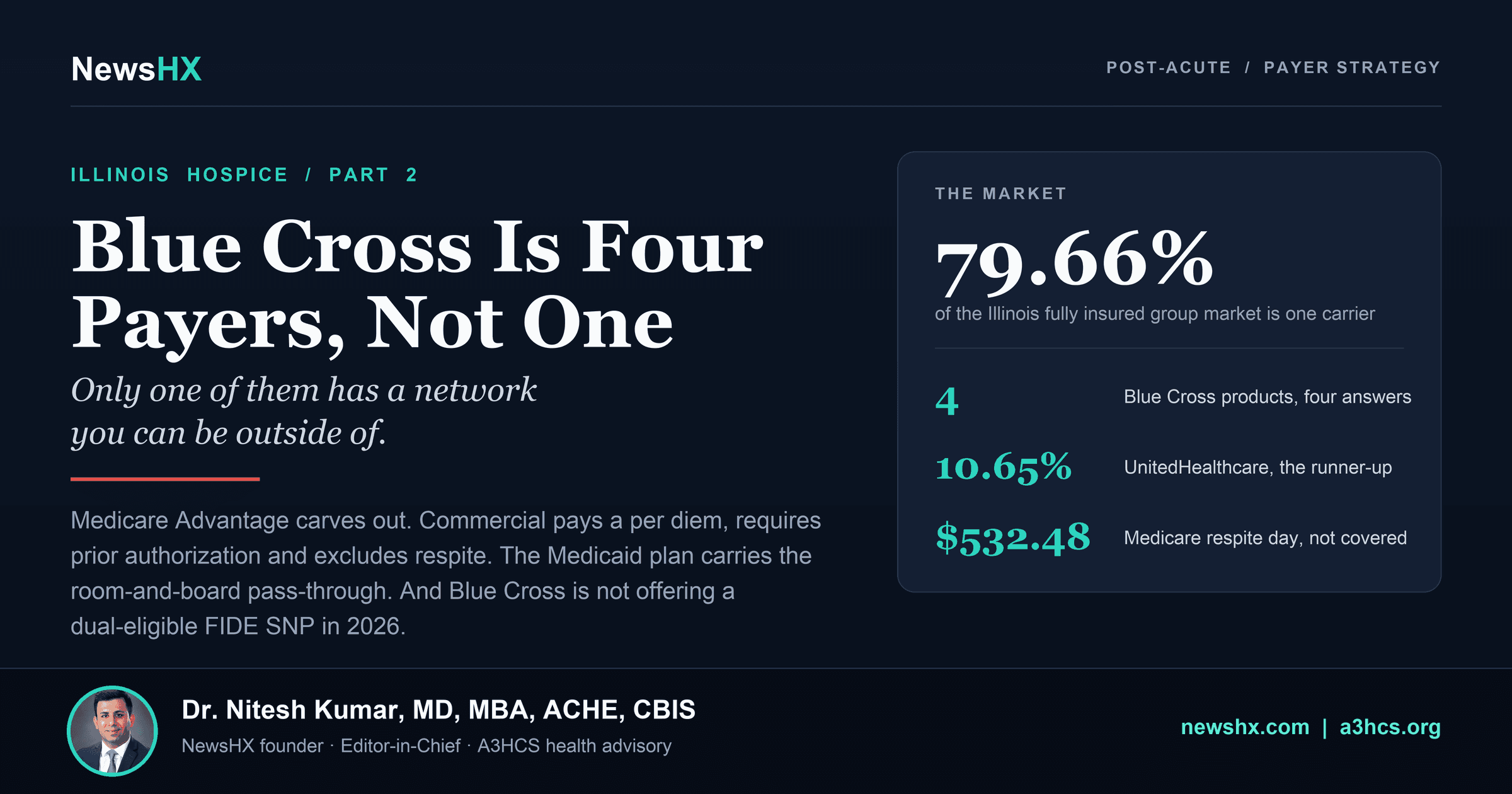
Blue Cross Is Not One Payer to an Illinois Hospice. It Is Four, and Only One of Them Has a Network You Can Be Outside Of.
Part 1 showed the Medicare hospice benefit has no network in either direction. This is the other tenth of the question, and in Illinois it has one name on the card: Blue Cross, which wrote 79.66% of the state's fully insured group premiums in 2024. That one name is four products with four answers. Medicare Advantage carves out, in Blue Cross's own manual. Commercial pays a per diem or payment maximum, not charges, requires prior authorization and excludes respite, a benefit Medicare pays at $532.48 a day. The Medicaid plan carries the nursing facility room-and-board pass-through. And Blue Cross left the dual-eligible market when MMAI ended, with no FIDE SNP for 2026. Why the commercial PPO is the only real in-network decision in hospice, and why the HMO is not.
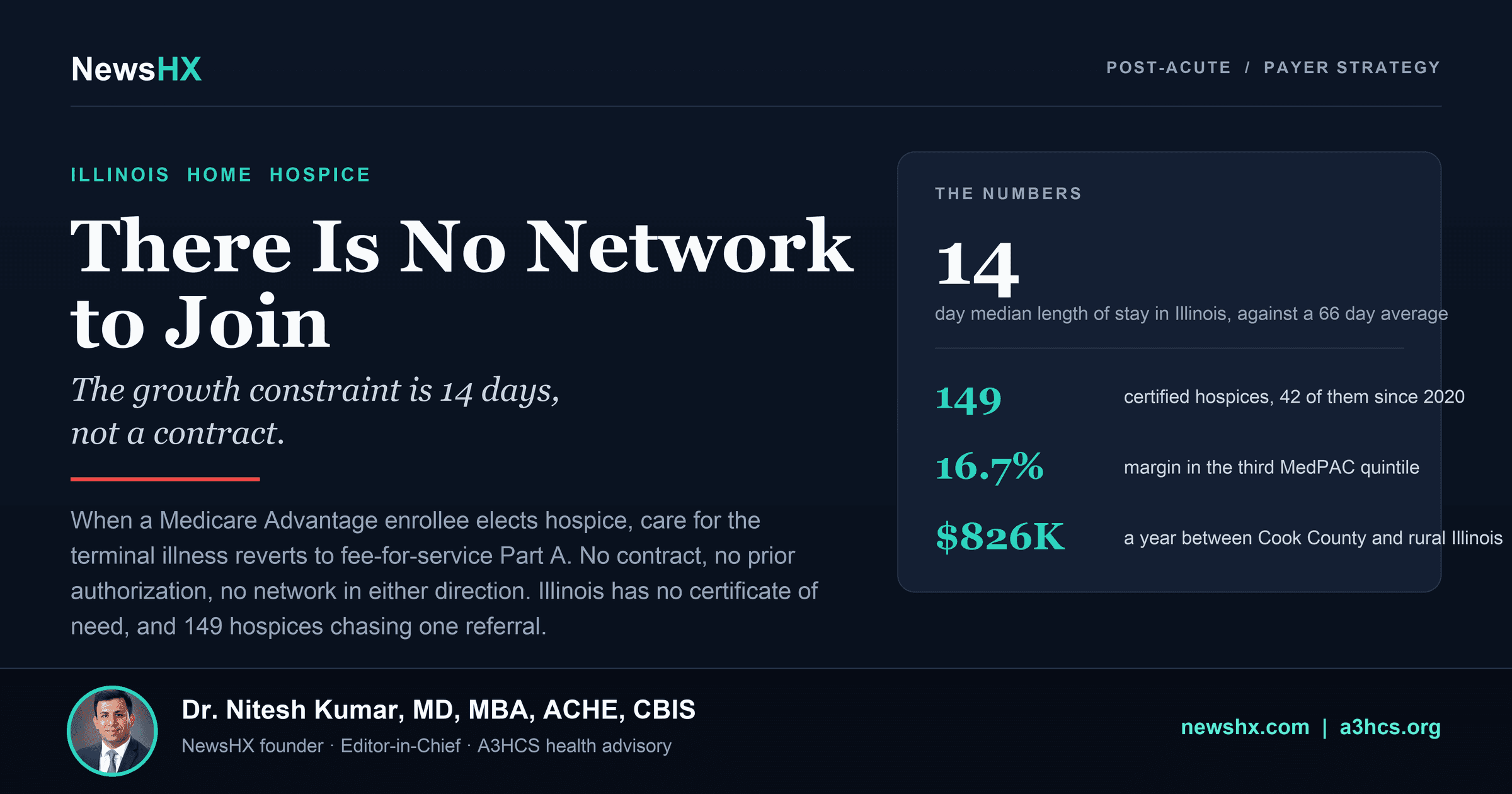
Illinois Home Hospice Has No Network to Join. The Growth Constraint Is 14 Days, Not a Contract.
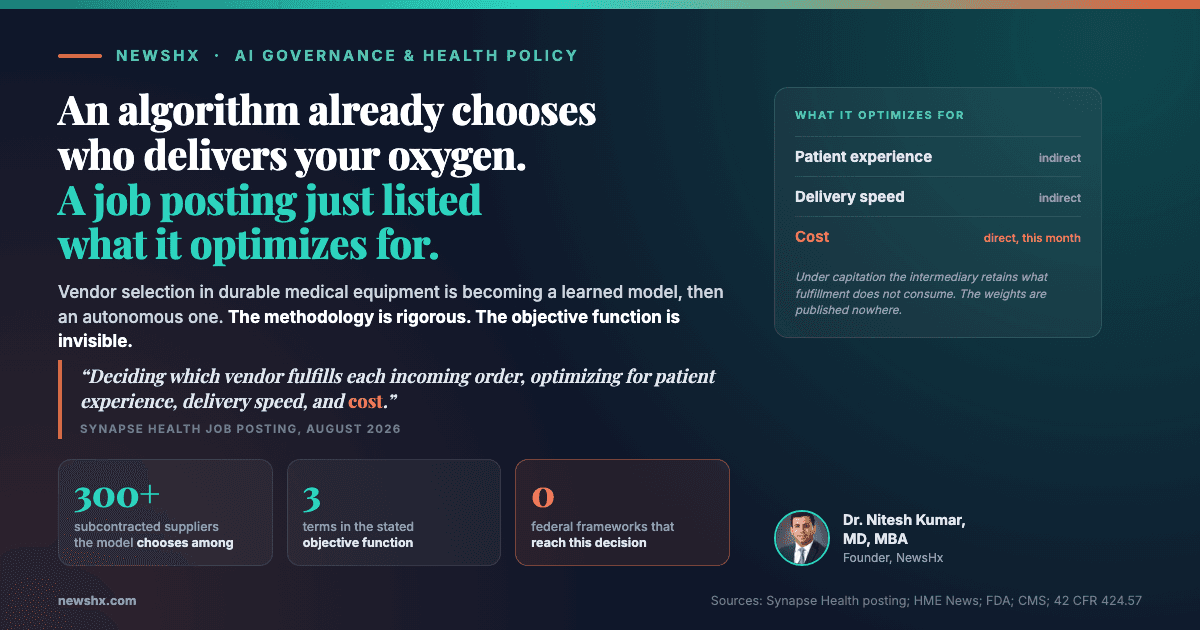
An Algorithm Already Chooses Who Delivers Your Oxygen. A Job Posting Just Listed the Three Things It Optimizes For.
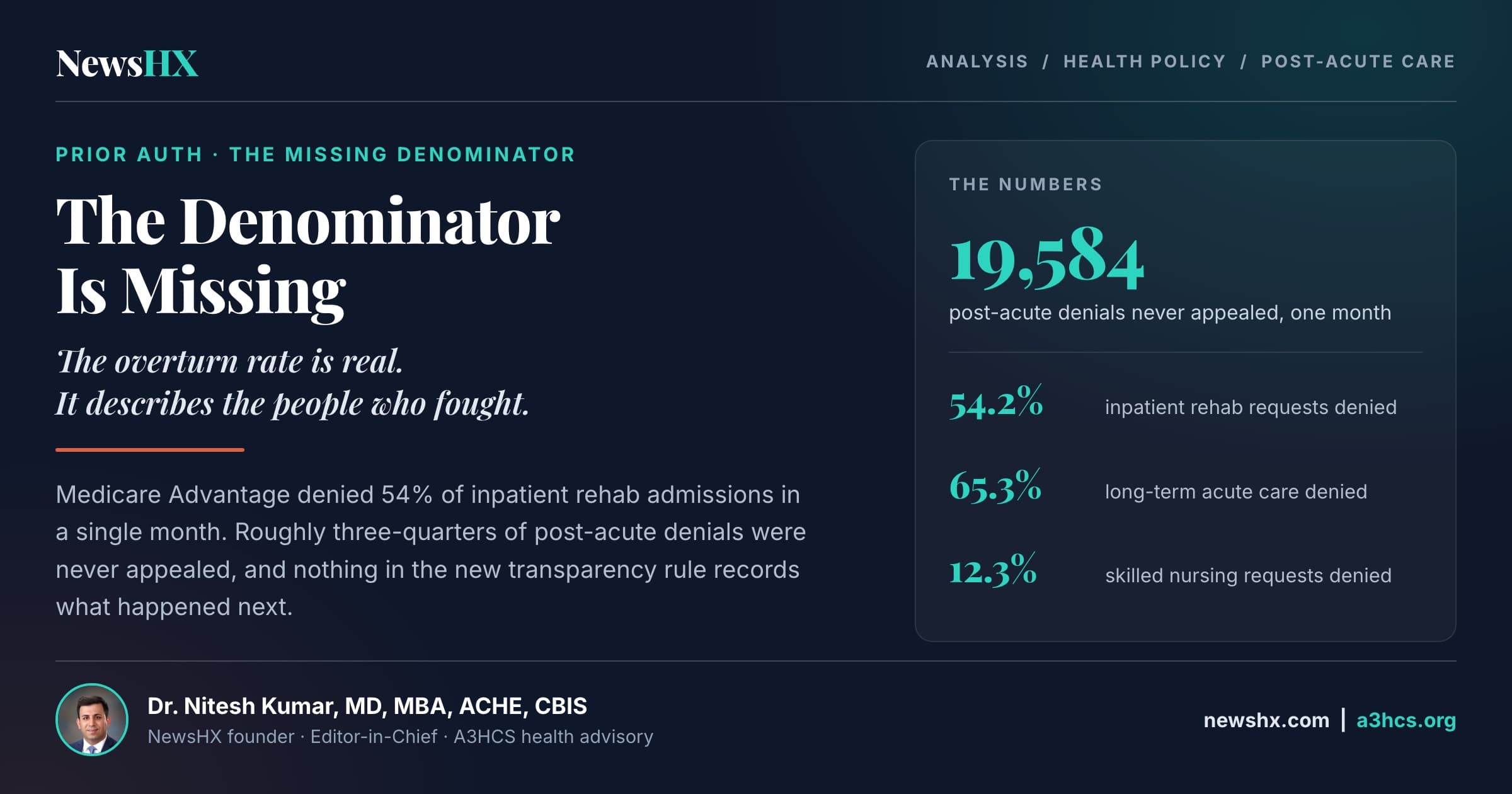
A 67% Overturn Rate Sounds Like Accountability. It Is Measuring the Wrong Patients.
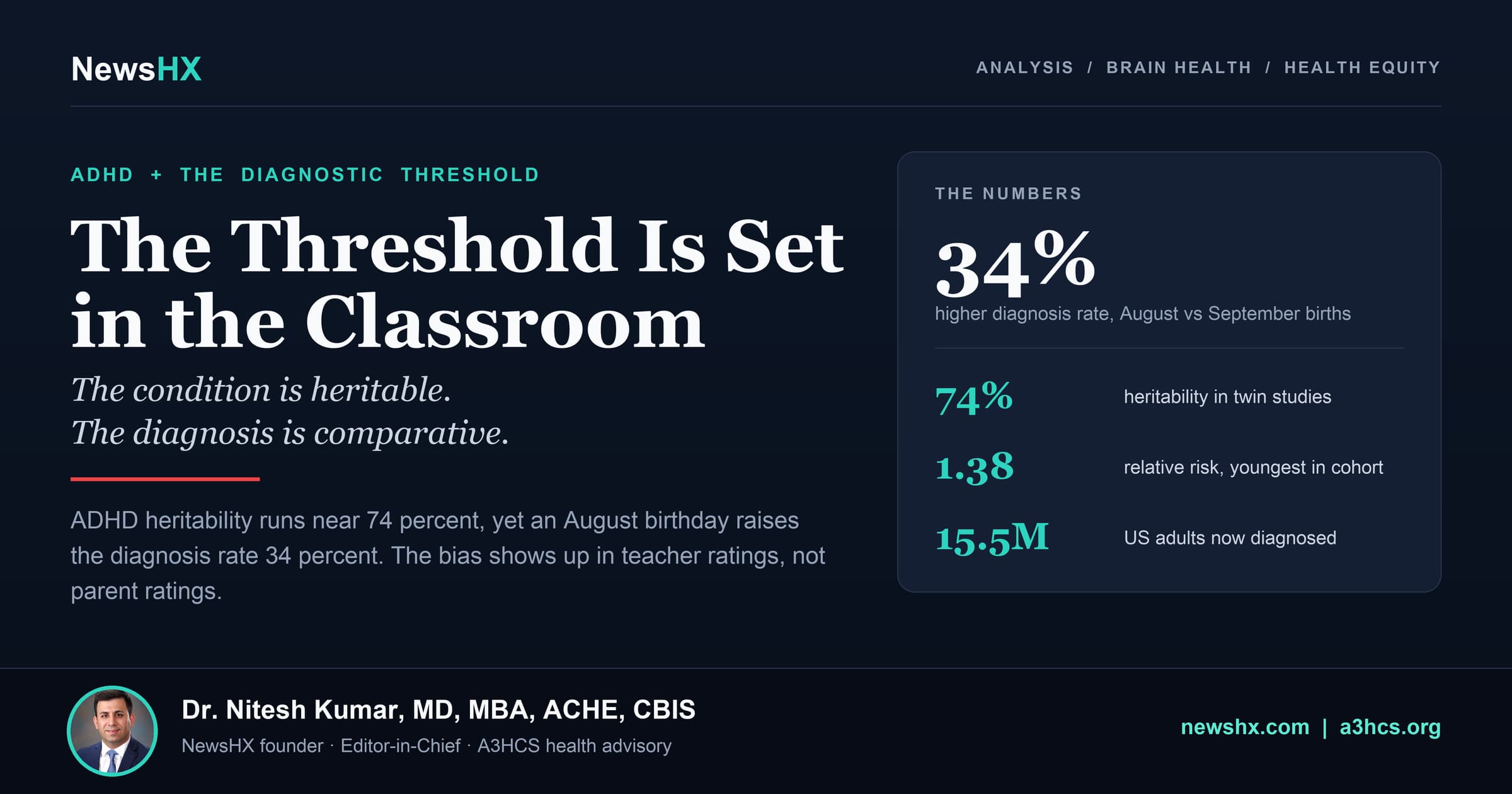
ADHD Is Among the Most Heritable Conditions in Psychiatry. Whether It Gets Diagnosed Depends on the Classroom.
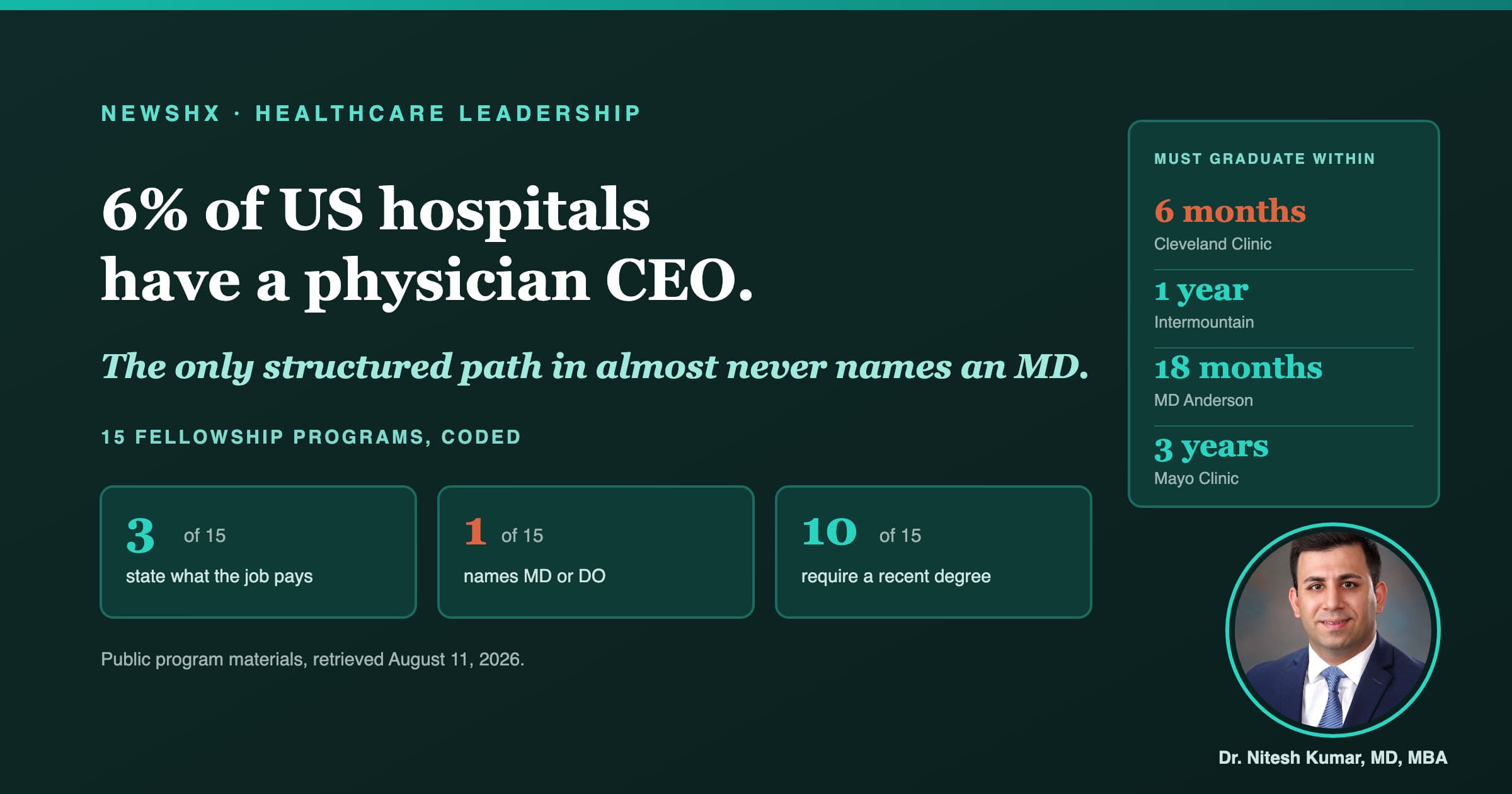
6% of US Hospitals Have a Physician CEO. The Only Structured Path In Almost Never Names an MD.
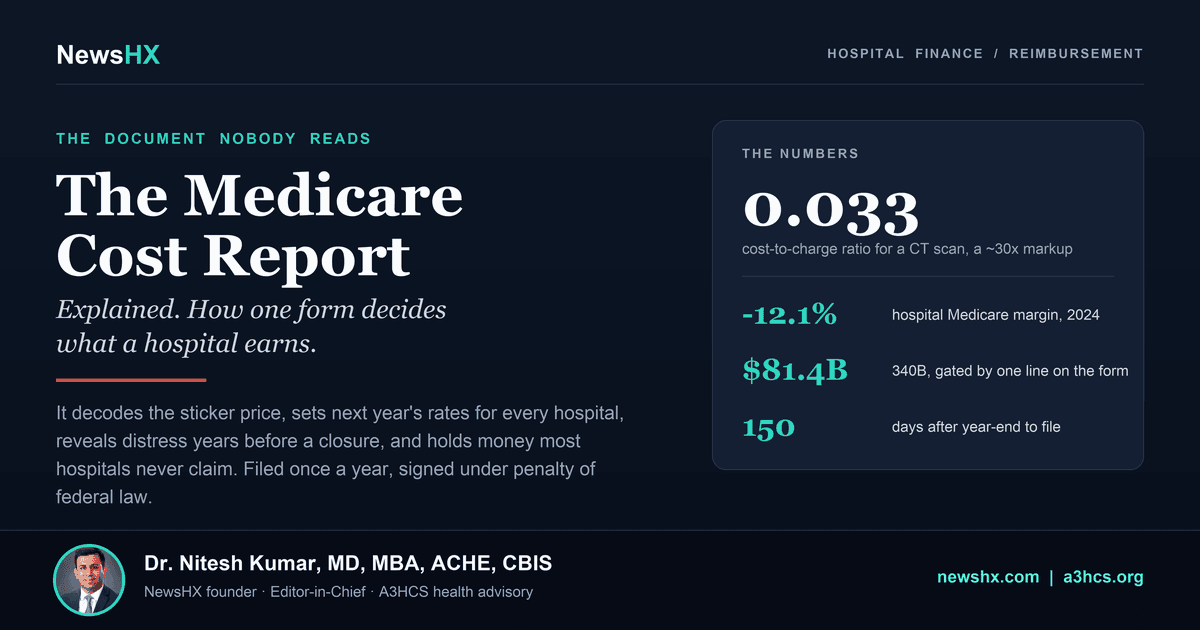
The Medicare Cost Report, Explained: How a Form Almost Nobody Reads Decides What Your Hospital Charges, Earns, and Whether It Survives
Health Signals
Stories corroborated across multiple independent outlets — what the whole industry is covering right now, with single-source noise filtered out.
A story appears here only when 2 or more of severalindependent sources report the same event. Corroboration reduces noise — it is not an endorsement of any single outlet's framing.
U.S. Health Statistics
Key vital statistics for the United States based on CDC and Census Bureau data.
United States Vital Statistics
US Population
0
Census Bureau estimate, July 2025
Daily Births
0
10.6 per 1,000 population
Daily Deaths
0
9 per 1,000 population
Life Expectancy
0
Years at birth (2024 final, record high)
Data at a Glance
U.S. Health By the Numbers
Mortality and health benchmark data from CDC National Vital Statistics System.
Leading Causes of Death
Annual U.S. deaths (thousands) — CDC NCHS, 2024 final
Mortality Trends (2018–2024)
Annual deaths in thousands — top 3 causes · Source: CDC NVSS
U.S. Health Indicators
Key benchmarks — Sources: CDC, Census Bureau, CMS
Life Expectancy
79%
Vaccination Rate
69%
Insured Population
92%
Preventable Deaths
34%
Emergency Health & Public Safety
Latest alerts and updates from CDC, WHO, and public health agencies
National Emergency
911
Life-threatening emergencies
Poison Control
1-800-222-1222
24/7 poison emergency help
Crisis Hotline
988
Suicide & Crisis Lifeline
CDC wastewater surveillance
Wastewater surveillance detects viral shedding across a community regardless of testing or care-seeking — an early, testing-independent read on where respiratory viruses are rising. Levels reflect concentration in sewersheds, not case counts.
Your Local Health Risk Assessment
Enter your zip code for live local conditions — air quality, UV, heat, active weather alerts, and your community's CDC health profile
Enter your zip code above to see your local environmental health snapshot
Healthy People 2030
Tracking national progress toward data-driven objectives to improve health and well-being over the decade. These Leading Health Indicators (LHIs) represent high-priority public health issues.
Attain healthy, thriving lives
Free of preventable disease, disability, injury, and premature death
Eliminate health disparities
Achieve health equity and attain health literacy
Create environments that promote health
Social, physical, and economic environments that promote health and well-being
Promote healthy development
Healthy development, healthy behaviors, and well-being across all life stages
On Track
Meeting 2030 target pace
Improving
Moving in right direction
Little Change
Needs increased effort
Getting Worse
Requires urgent action
Persons with Medical Insurance
AHS-01improvingIncrease the proportion of people with health insurance
Colorectal Cancer Screening
C-07improvingIncrease colorectal cancer screening based on most recent guidelines
Calories from Added Sugars
NWS-10improvingReduce consumption of calories from added sugars
Adult Cigarette Smoking
TU-02on trackReduce current cigarette smoking in adults
Seasonal Influenza Vaccination
IID-08little changeIncrease annual influenza vaccination coverage
Infant Deaths
MICH-04improvingReduce the rate of infant deaths
Adolescent Depression Treatment
MHMD-02improvingIncrease treatment for adolescents with major depressive episodes
Childhood Obesity
NWS-03getting worseReduce obesity in children and adolescents
Adults Meeting Physical Activity Guidelines
PA-10improvingIncrease adults meeting aerobic and muscle-strengthening guidelines
4th Grade Reading Proficiency
SDOH-01getting worseIncrease 4th grade students reading at or above proficient level
Working-Age Employment
SDOH-03on trackIncrease employment among working-age population
Unhealthy Air Exposure
EH-03improvingReduce number of people exposed to unhealthy air
Binge Drinking
AH-08getting worseReduce binge drinking in past 30 days
Hypertension Control
HDS-04little changeIncrease blood pressure control among adults with hypertension
Household Food Insecurity
NWS-04getting worseReduce household food insecurity and hunger
Source: HHS Healthy People 2030 program. Baseline and target values reflect official HP2030 objectives. Current estimates are based on CDC tracking data and may be updated as new surveillance data becomes available. For authoritative data, visit health.gov/healthypeople.
FDA Safety & Regulatory News
Live recalls, warnings, and IARC-classified cancer agents under FDA scrutiny
U.S. Mortality Data Explorer
National leading causes of death, age-adjusted rates, state-level comparison, and historical trends. Sourced from CDC NVSS, NCHS Open Data, HDPulse, and WHO.
Total Deaths Shown
2,240,974
Filtered results · CDC NVSS 2023
Causes Shown
11
of 11 total
Preventable Causes
10
can be reduced
Viewing
All Ages
All sexes
Heart Disease
ChronicPreventableCancer
ChronicPreventableUnintentional Injuries
InjuryPreventableStroke
ChronicPreventableCLRD
ChronicPreventableAlzheimer's Disease
ChronicDiabetes
ChronicPreventableKidney Disease
ChronicPreventableLiver Disease
ChronicPreventableCOVID-19
InfectiousPreventableSuicide
InjuryPreventableNational data: CDC NVSS 2023 Final (deaths & percentages) and CDC Open Data API for age-adjusted rates and state comparisons (1999–2017 NCHS dataset). Age-adjusted rates per 100,000 allow valid comparison across states and time periods regardless of population age structure.
Reference & Education
Legal Medicine & Professionalism
Clinical frameworks, ethical guidance, and legal standards for providers across the care continuum.
Legal & Ethical Foundations
- Capacity & Consent
- Medical Law
- Ethics of Disclosure
- Professionalism
Patient Safety & Quality
- Error Reporting
- QI Frameworks
- Patient Communication
- High Reliability
Palliative & End-of-Life
- Goals of Care
- Advance Directives
- Grief Counseling
- Death & Dying
Crisis & Behavioral Medicine
- Suicidality
- Agitation & Violence
- De-escalation
- Safety Planning
Vulnerable Populations
- IPV & Sexual Violence
- Elder Abuse
- Child Maltreatment
- Human Trafficking