

Analysis
Original commentary on the business of medicine.
Where the news section curates the full care continuum, this is the editorial voice behind it: original analysis on healthcare strategy, brand, and leadership, written by a physician-executive for leaders who make real decisions.
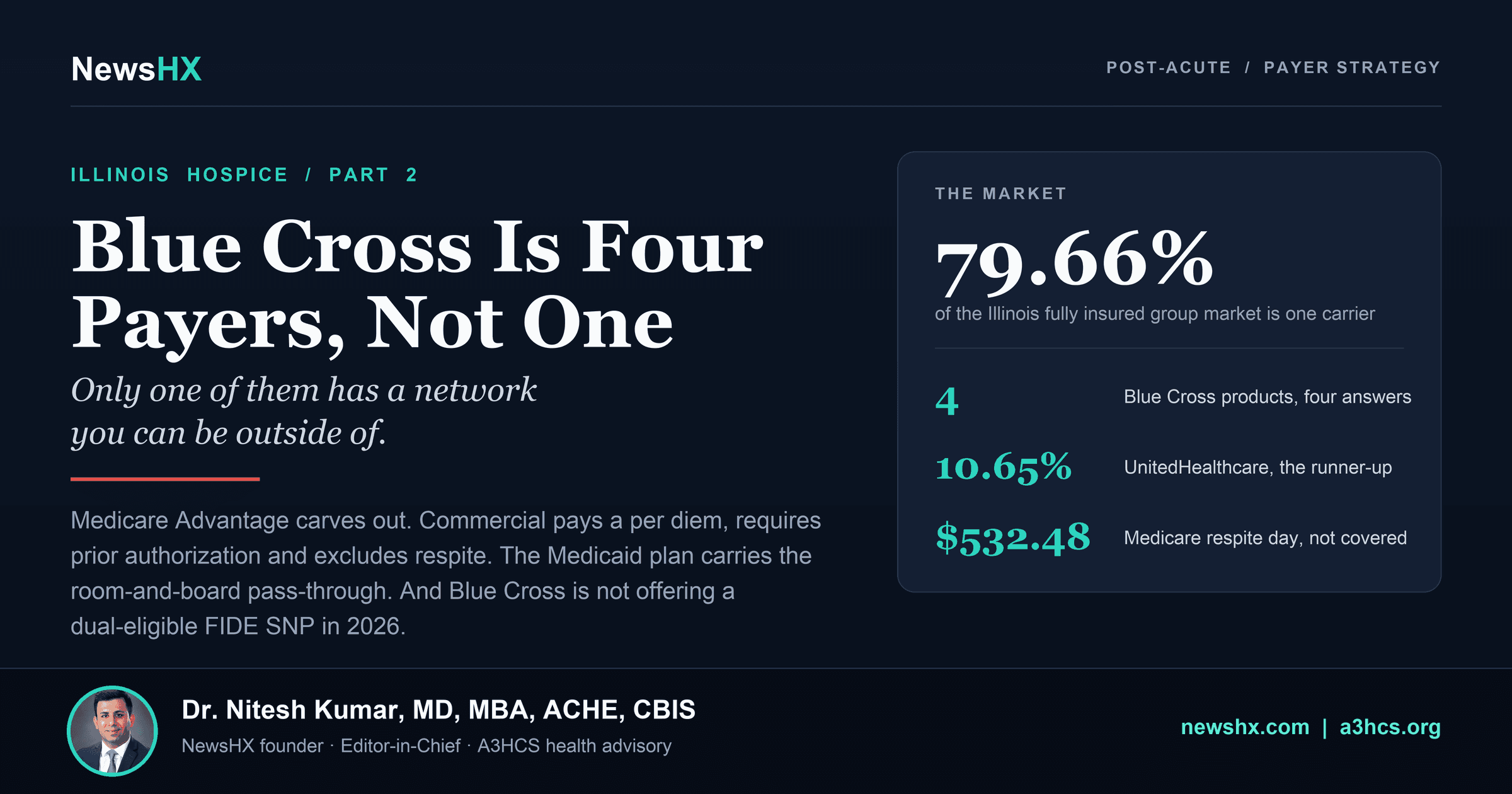
Blue Cross Is Not One Payer to an Illinois Hospice. It Is Four, and Only One of Them Has a Network You Can Be Outside Of.
Part 1 showed the Medicare hospice benefit has no network in either direction. This is the other tenth of the question, and in Illinois it has one name on the card: Blue Cross, which wrote 79.66% of the state's fully insured group premiums in 2024. That one name is four products with four answers. Medicare Advantage carves out, in Blue Cross's own manual. Commercial pays a per diem or payment maximum, not charges, requires prior authorization and excludes respite, a benefit Medicare pays at $532.48 a day. The Medicaid plan carries the nursing facility room-and-board pass-through. And Blue Cross left the dual-eligible market when MMAI ended, with no FIDE SNP for 2026. Why the commercial PPO is the only real in-network decision in hospice, and why the HMO is not.
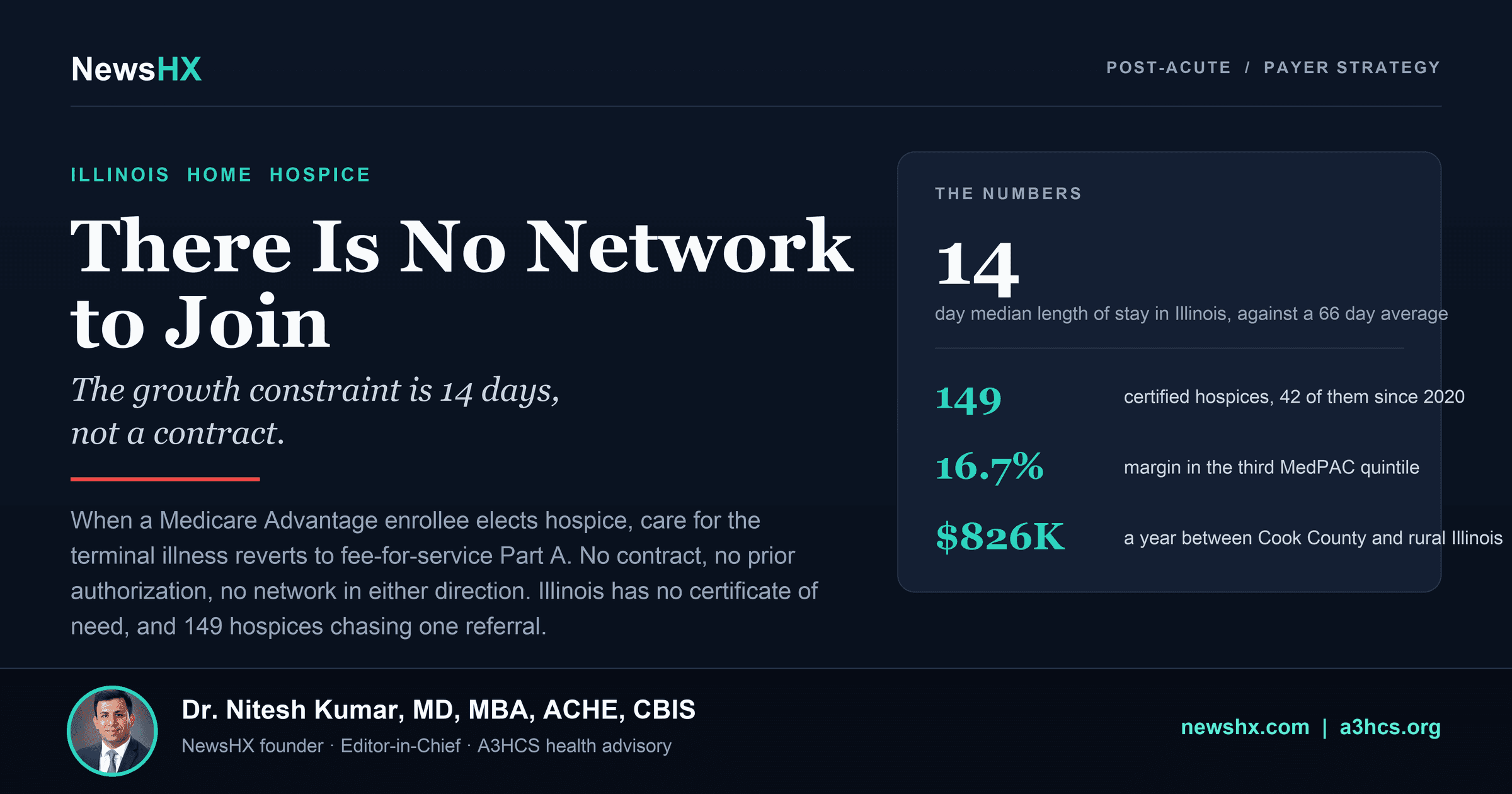
Illinois Home Hospice Has No Network to Join. The Growth Constraint Is 14 Days, Not a Contract.
Operators building home hospice census in Illinois keep asking whether to contract with every payer or stay out. For the benefit that is roughly nine-tenths of the revenue, neither option is on the table: hospice carves out to fee-for-service Part A the moment a Medicare Advantage enrollee elects it, so there is no network to join and none to be excluded from. CMS tested the alternative and shut it down on December 31, 2024, and the demonstration's own three-year series runs 37% to 48% to 55% in-network share, which says the opposite of what its first year is usually quoted to prove. Meanwhile Illinois has no certificate of need for hospice, 149 certified providers, 42 of them since 2020, and a 14-day median length of stay against a 66-day average. The county rate table, the MedPAC margin curve, and the one Illinois growth channel that carries no room-and-board leak.
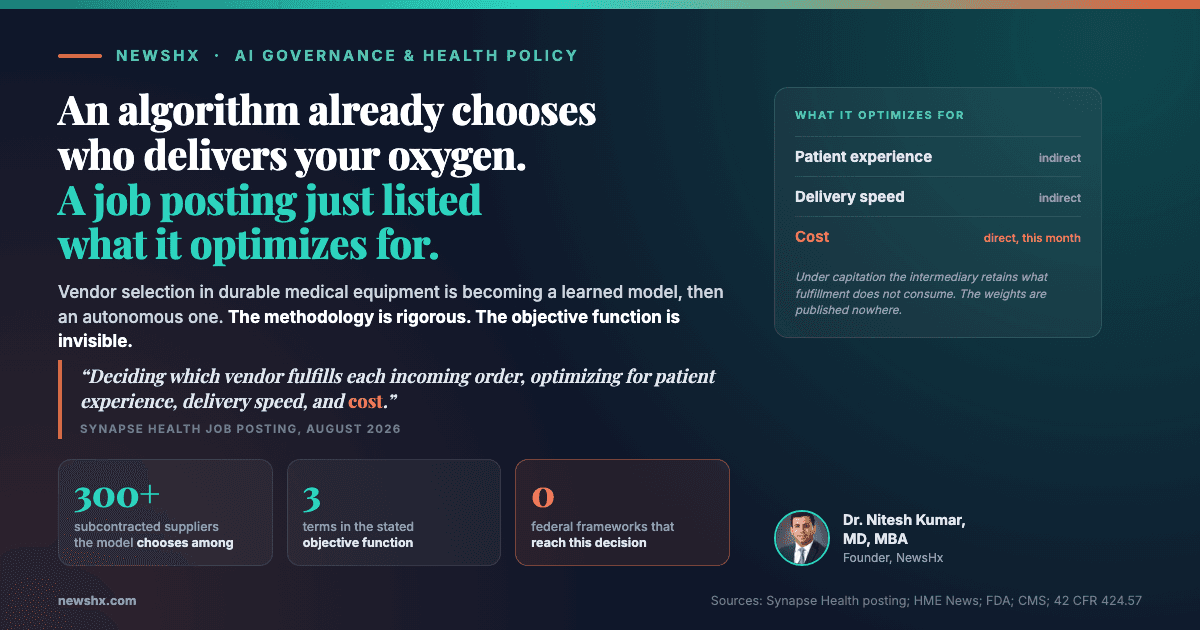
An Algorithm Already Chooses Who Delivers Your Oxygen. A Job Posting Just Listed the Three Things It Optimizes For.
Vendor selection in durable medical equipment is moving from human judgment to a learned model, then to automation. The methodology described is more rigorous than most healthcare AI ever gets. The objective function is the part nobody outside the company can see.
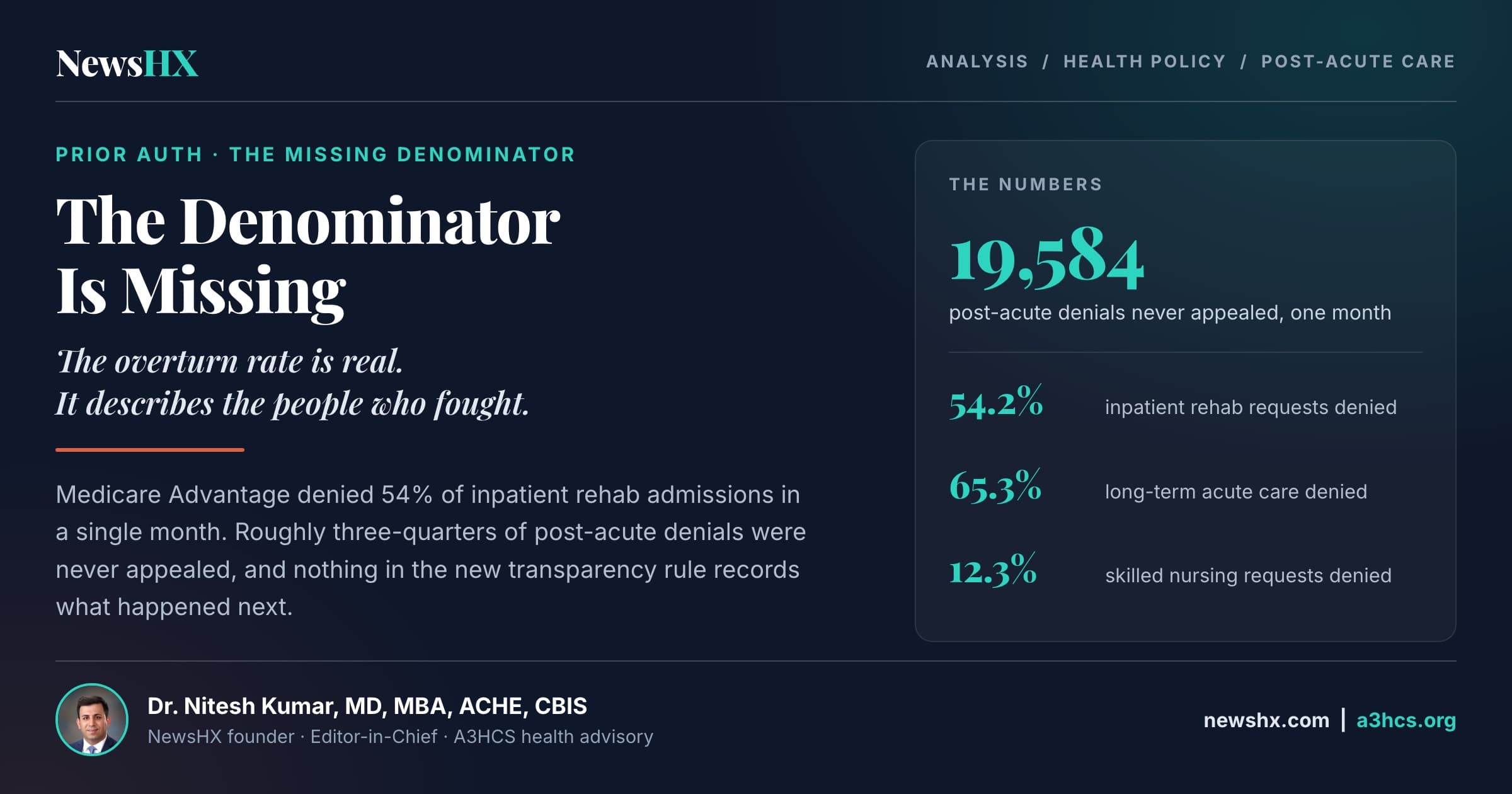
A 67% Overturn Rate Sounds Like Accountability. It Is Measuring the Wrong Patients.
For the first time, every major health plan has published its prior authorization denial rates. The number everyone repeated was the overturn rate: two-thirds of appealed Medicare Advantage denials get reversed. That statistic is real, and it describes a self-selected minority. The rule that produced it does not require insurers to report how many people appealed, how many requests there were, or what service was denied. Meanwhile a separate federal dataset shows Medicare Advantage plans denied 54% of inpatient rehabilitation admission requests and 65% of long-term acute care requests in a single month, and that roughly two-thirds of those patients never appealed at all. In post-acute care a denial rarely becomes an appeal. It becomes a lower level of care, and nothing in the new transparency regime records that as having happened.
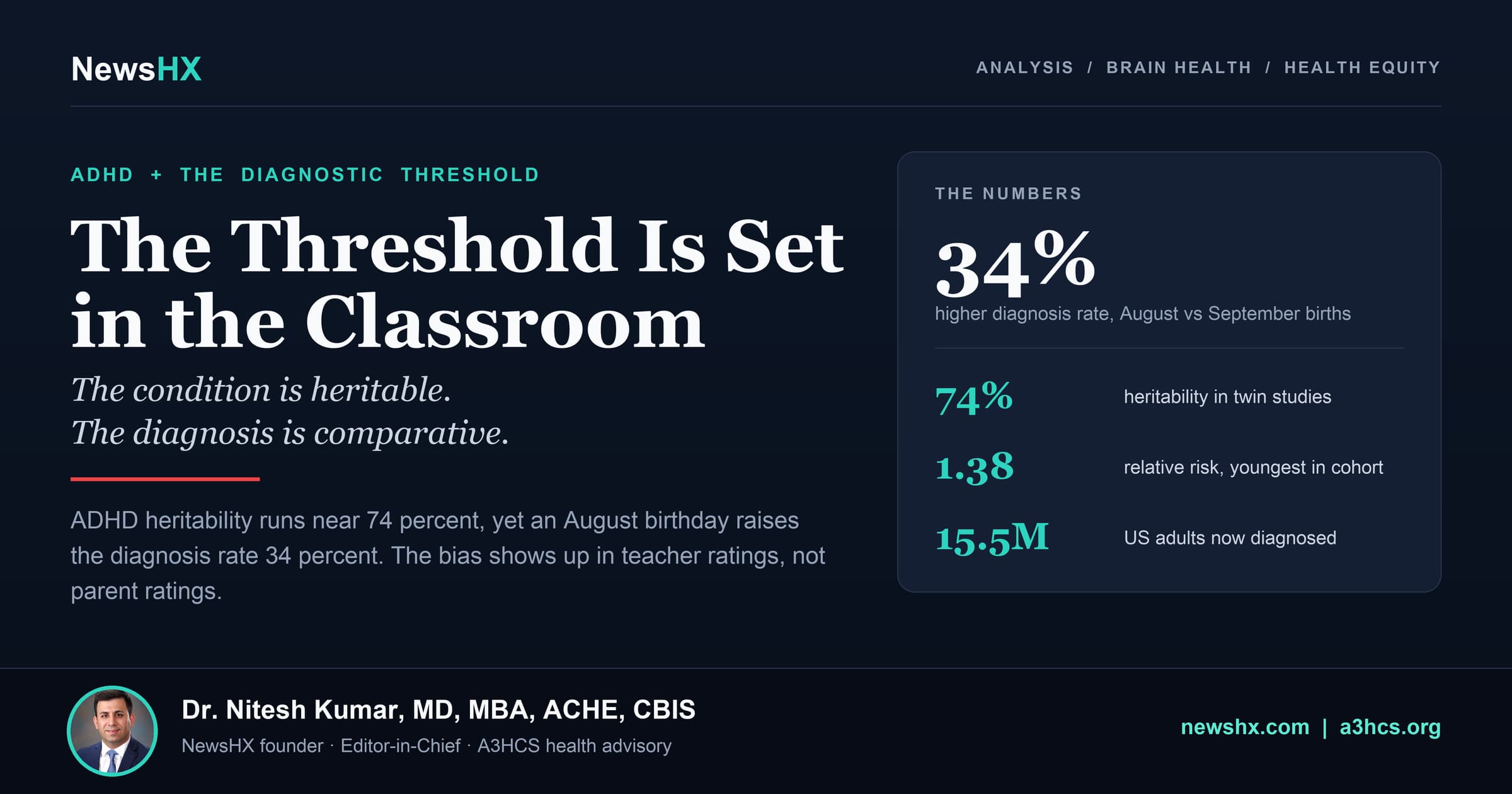
ADHD Is Among the Most Heritable Conditions in Psychiatry. Whether It Gets Diagnosed Depends on the Classroom.
Twin studies put ADHD heritability near 74 percent, which should make diagnosis a stable question. It is not. Children born in August are diagnosed 34 percent more often than children born in September, the bias shows up in teacher ratings and not parent ratings, cross-country differences track measurement method rather than real rates, and Black and Latino children in the United States are diagnosed and treated far less often than white peers with the same symptoms. The condition is biological. The threshold is environmental, and it is set long before anyone reaches a clinic.
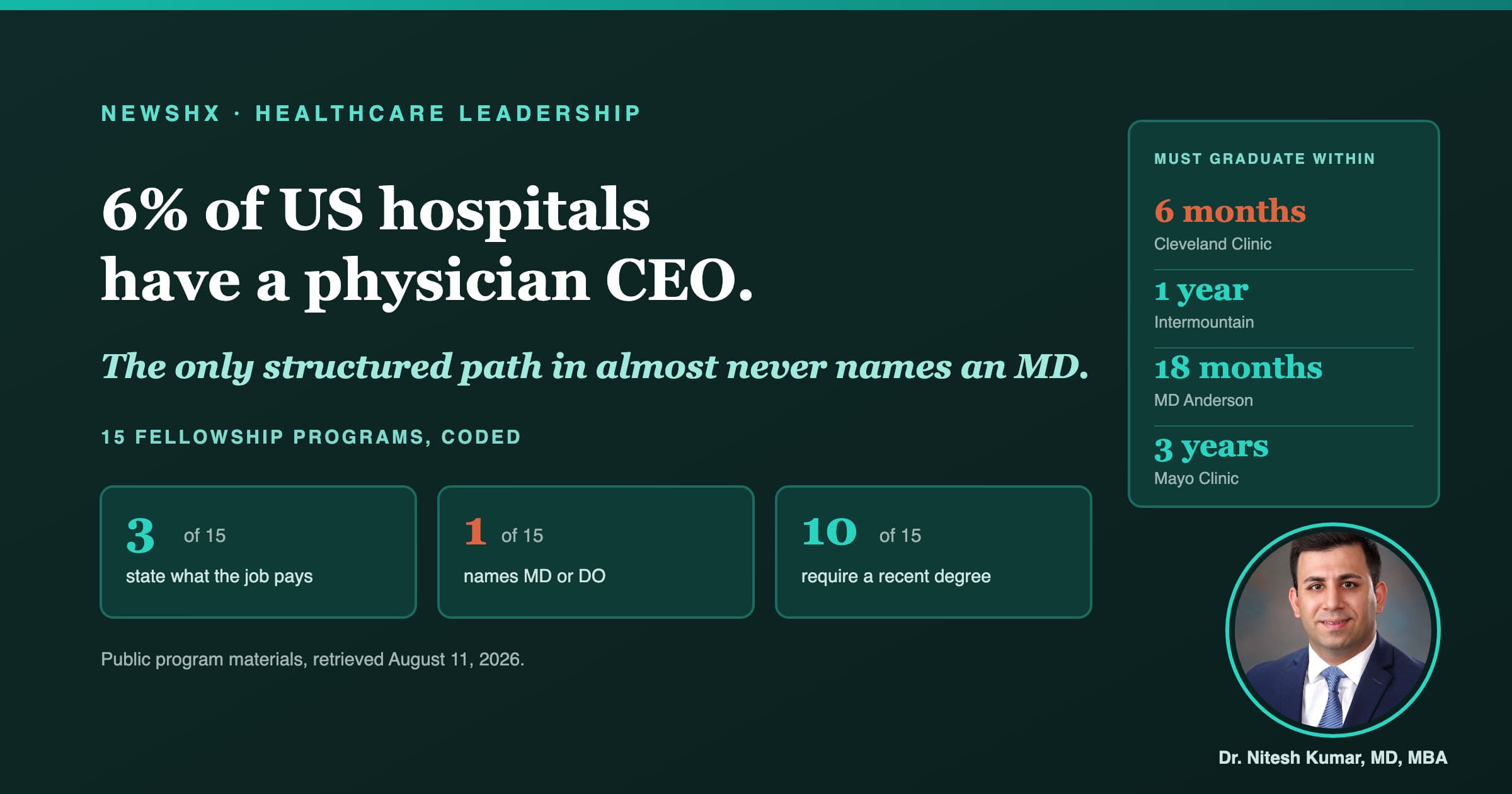
6% of US Hospitals Have a Physician CEO. The Only Structured Path In Almost Never Names an MD.
Of 15 administrative fellowship programs at major US health systems, one names MD or DO as a qualifying degree and ten impose a graduation window that a mid-career physician cannot meet. The usual explanation for the physician-leadership gap blames physician preference. The postings suggest something duller and more fixable.
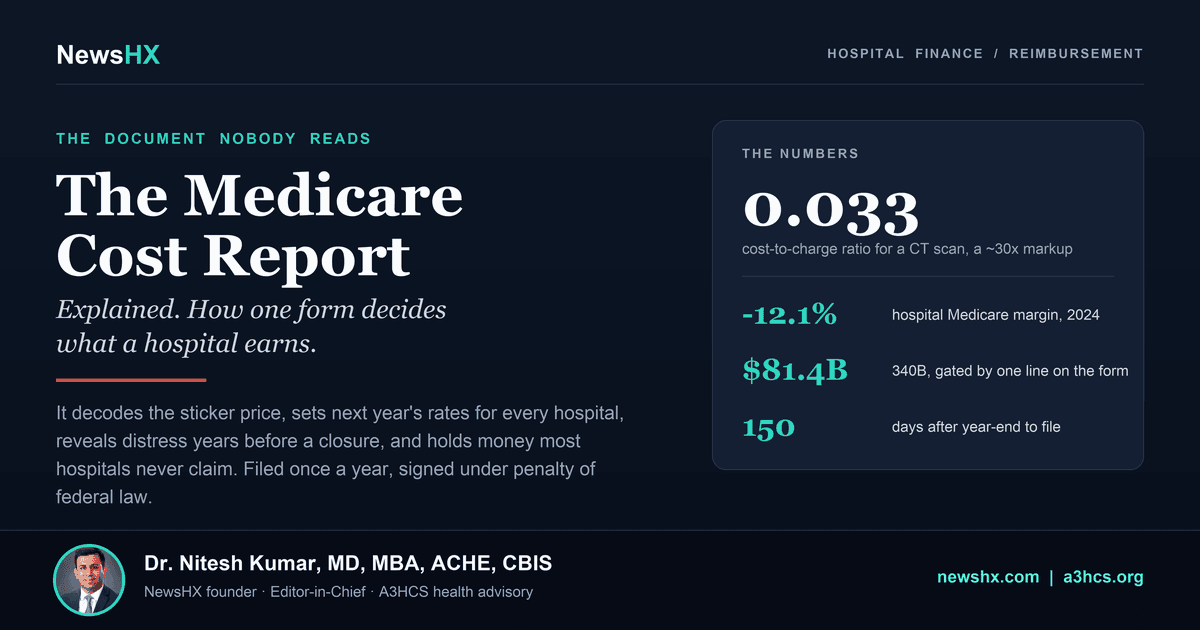
The Medicare Cost Report, Explained: How a Form Almost Nobody Reads Decides What Your Hospital Charges, Earns, and Whether It Survives
A hospital bill is the most confidently precise document in American life that also happens to be fiction. The $4,500 line for a day in a bed, the $9,000 for a scan that cost a few hundred to run, are real in the sense that they are printed, and unreal in the sense that they describe neither what the care cost nor what anyone will pay. The document that reconciles them is one the public has never seen: the Medicare cost report, filed once a year, department by department, certified by the CFO under penalty of federal law. It decodes the sticker. It sets next year's rates for every hospital, not just the one that filed it. It reveals, years in advance, whether a hospital is dying. For a hospital fighting to survive, it is a map of money already earned and never claimed. And because tens of billions of dollars key off it, it has become one of the most gamed and fought-over documents in American health care.
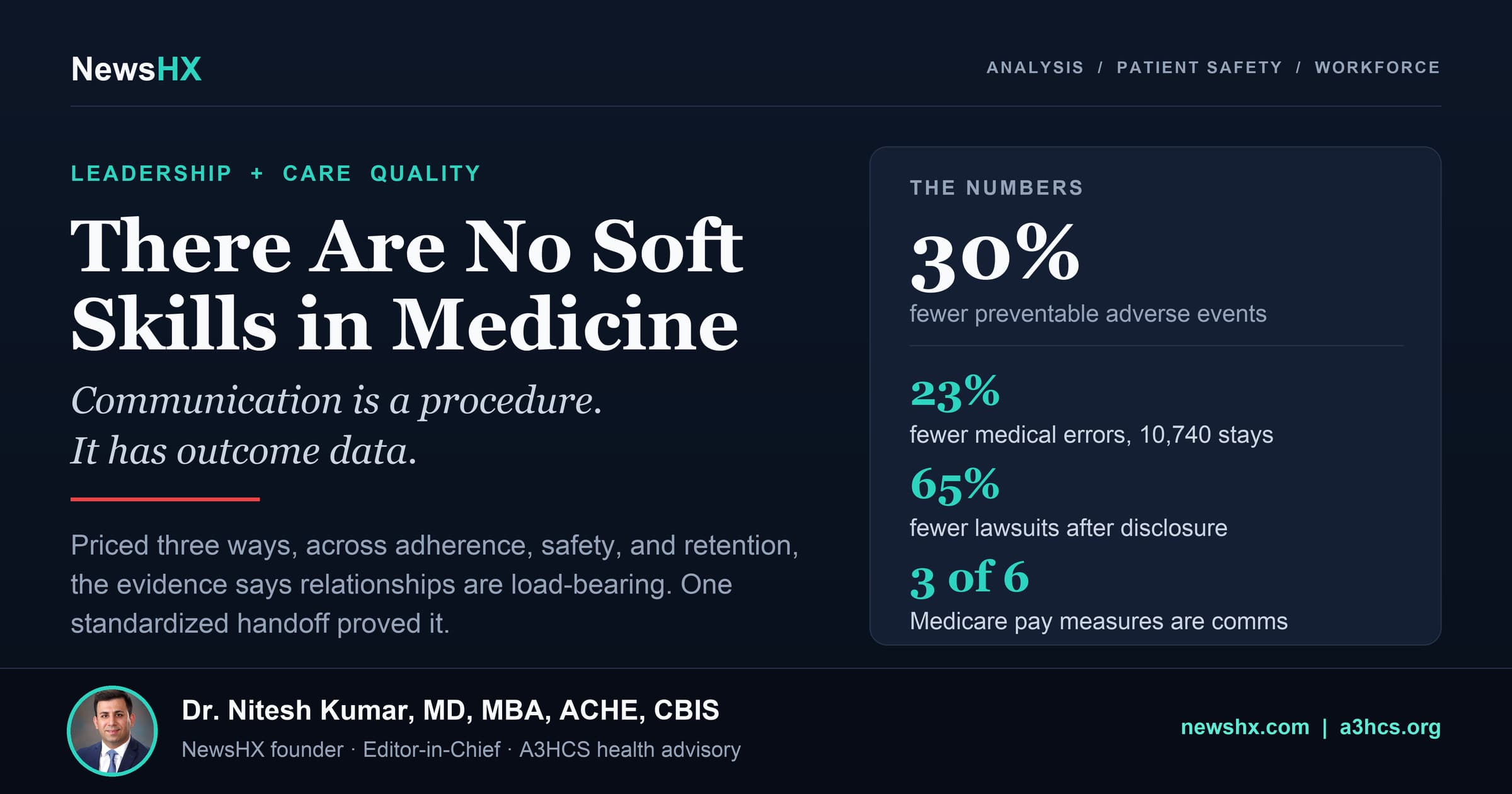
We Call It a “Soft Skill.” It’s the Most Expensive Mislabel in Healthcare.
Relationships and communication get filed under "soft skills," which tells a CFO the training is optional, a curriculum committee to schedule it last, and a burned-out clinician that the human part of the job does not count. The evidence says the opposite. Communication is a trainable clinical procedure with a dose-response curve, and it moves adherence, safety, readmissions, reimbursement, and whether clinicians stay. Priced three ways, "soft" is the least accurate word we could have chosen.
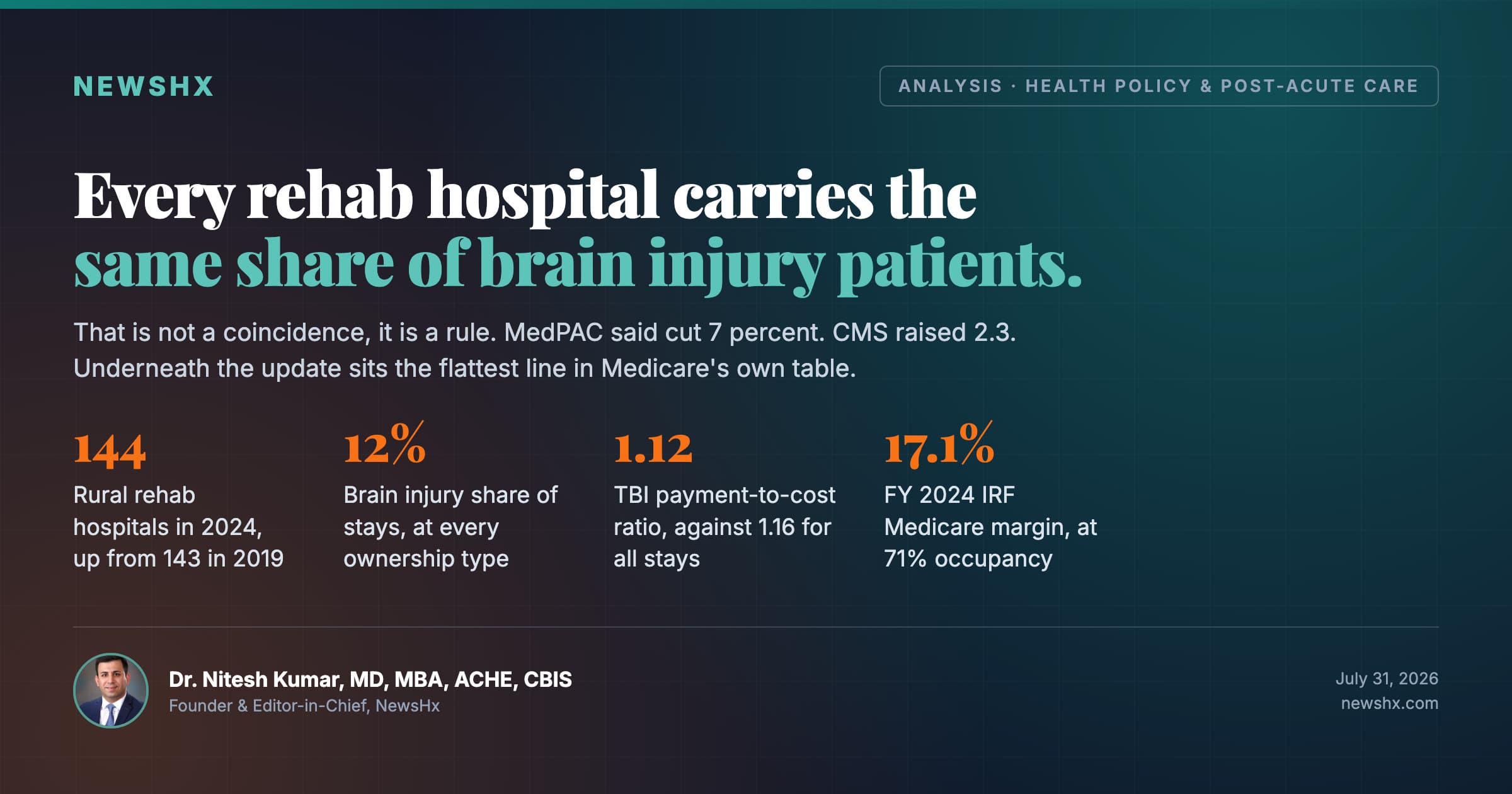
Every Rehab Hospital Carries the Same Share of Brain Injury Patients. That Is Not a Coincidence, It Is a Rule.
Medicare's advisory commission looked at inpatient rehabilitation hospitals this spring and recommended cutting their payment rate by 7 percent. Margins were above 17 percent. Beds sat a third empty. On July 30, CMS raised the rate 2.3 percent instead. But the number that explains the American rehabilitation system is not in the payment update at all. It is in a supply table: there are 144 rural inpatient rehabilitation facilities in the United States. In 2019 there were 143. Six years of record margins, record volume, and record facility growth bought rural America exactly one rehabilitation hospital.
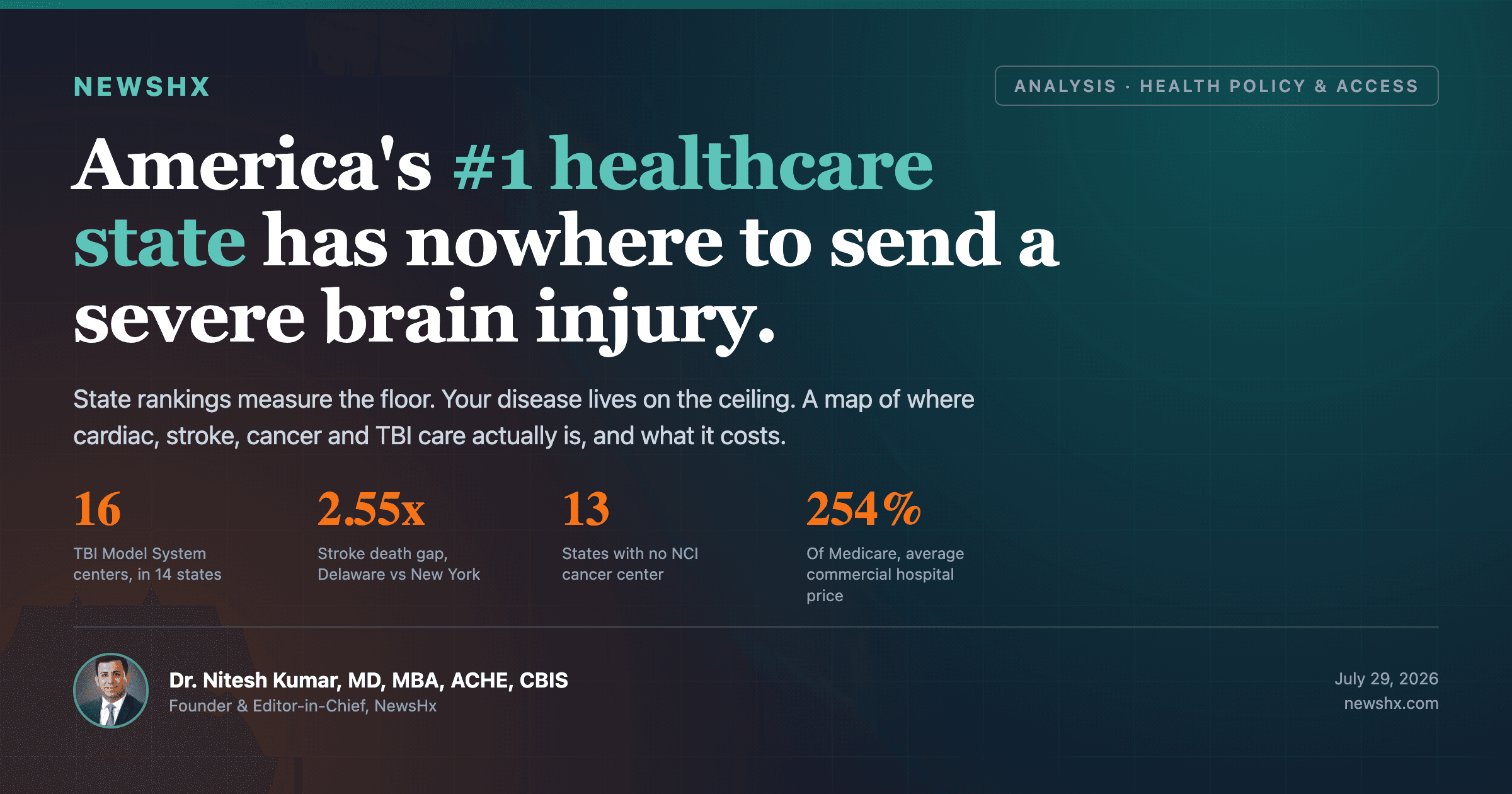
New Hampshire Is America's Best Healthcare State. It Has Nowhere to Send a Severe Brain Injury.
Every summer a new ranking tells Americans which states have the best healthcare, and every summer the ranking answers a question almost nobody is actually asking. State rankings measure the floor: what a routine visit costs, whether a clinician is reachable, how the average resident fares. They do not measure the ceiling: whether the specific thing about to happen to you, a stroke inside the thrombectomy window, a glioblastoma, a severe brain injury needing eighteen months of rehabilitation, has a center within reach that can handle it. Those two maps do not overlay. New Hampshire is first in the country and has no federally designated brain injury center and no US News Honor Roll hospital. Georgia is 49th and has Shepherd Center. Alaska is dead last and sits in the best-performing quartile in America for heart disease deaths. This is a guide to reading both maps at once.
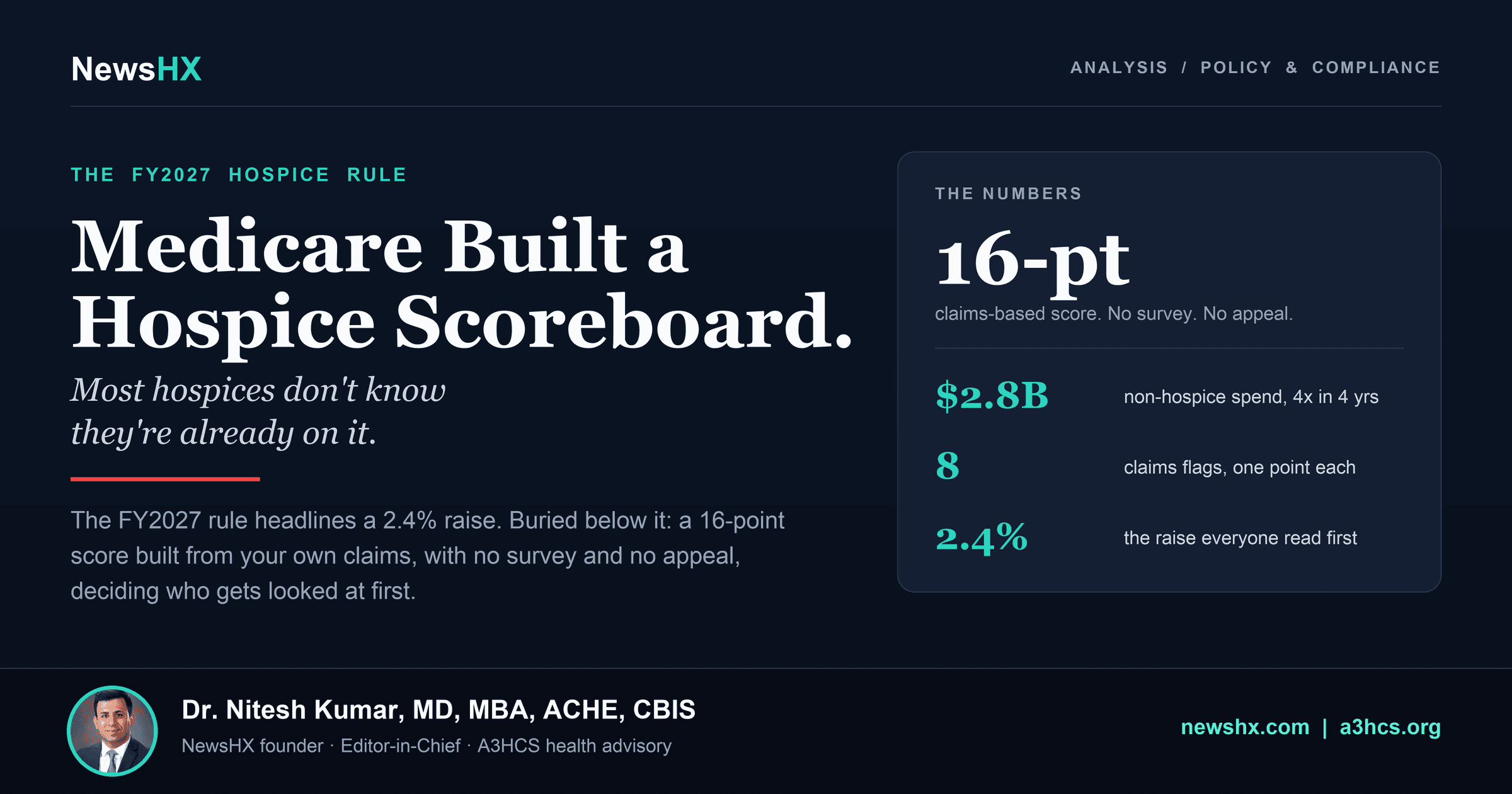
Medicare Just Built a Scoreboard for Hospices. Most Don't Know They're Already on It.
Every spring, the hospice trade press leads with the same number: this year's Medicare payment update. For FY 2027 it is 2.4%, worth about $785 million. That number is the part of the rule designed to be read. The part that matters more is buried in the quality-reporting section, where CMS proposes to score every hospice in the country on a 16-point index built entirely from your own claims, with no survey, no appeal, and no notice that you are being measured. The payment update is what CMS is paying you. The index is how CMS is deciding whether it believes you earned it.
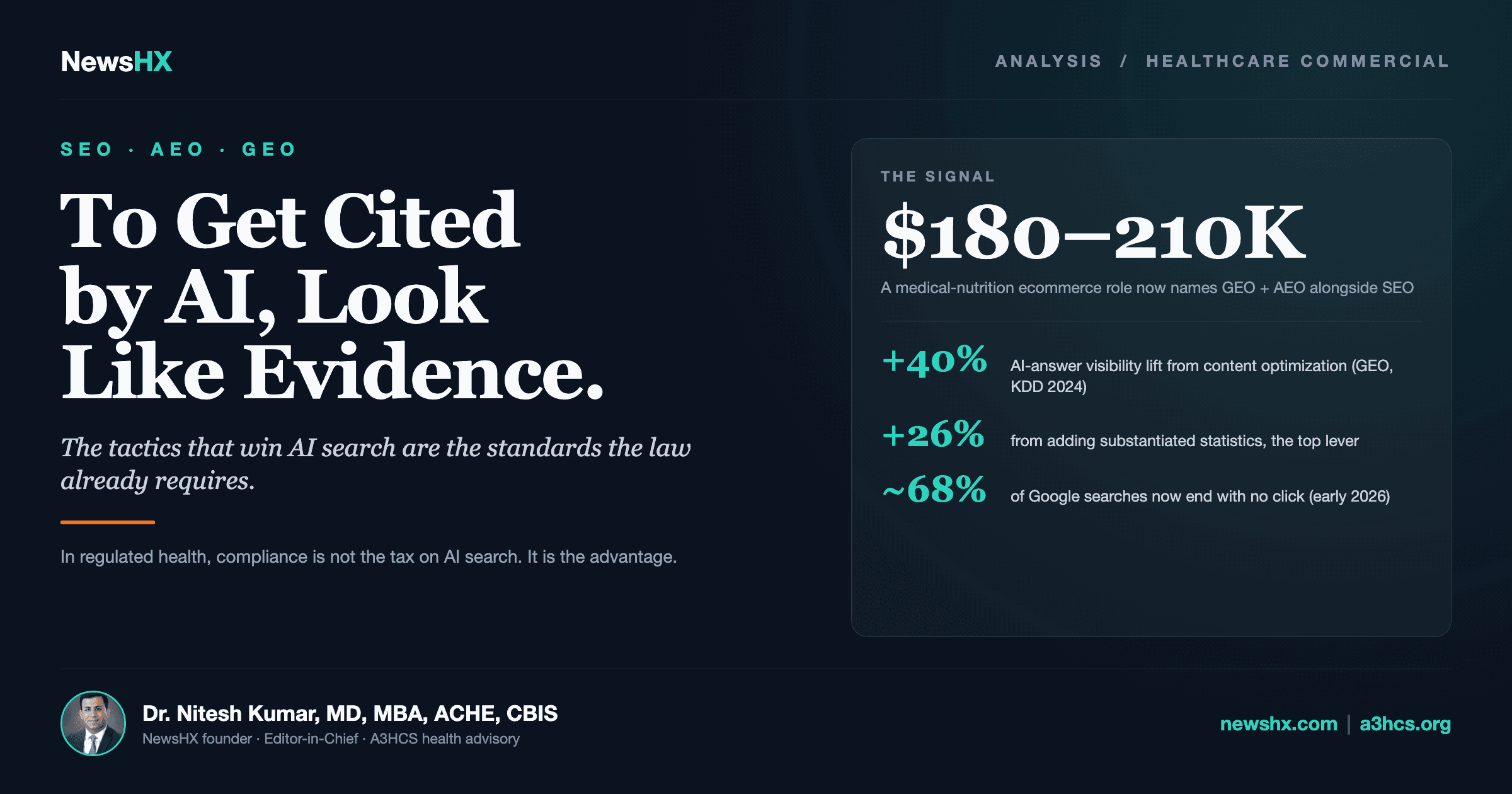
Getting Recommended by AI Is Now a $200K Healthcare Job. The Rules That Win the Machine Are the Rules the Law Already Wrote.
Getting recommended by an AI answer engine is no longer a marketing curiosity. A major medical-nutrition company just priced the skill at director level, in a job with FDA and FTC compliance stapled to the same page. The twist the marketing blogs miss: the tactics that win AI citations are the exact evidentiary standards the law already forces on a health brand. In regulated health, rigor is not the tax on AI search. It is the moat.
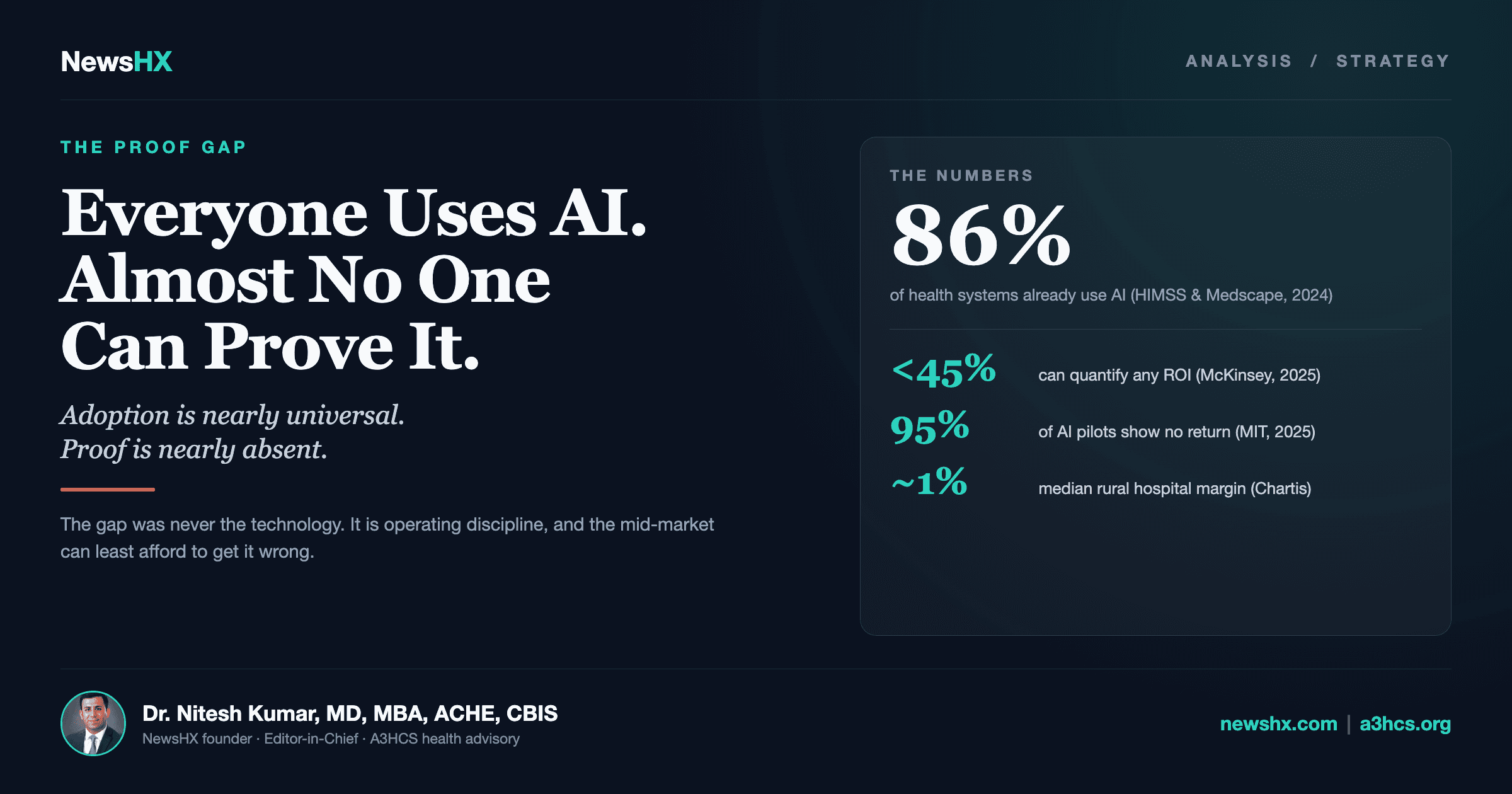
Nearly Every Health System Now Uses AI. Almost None of Them Can Prove It Works.
The problem was never access to the technology. It is operating discipline. And that fix does not require a nine-figure IT budget or a McKinsey retainer.
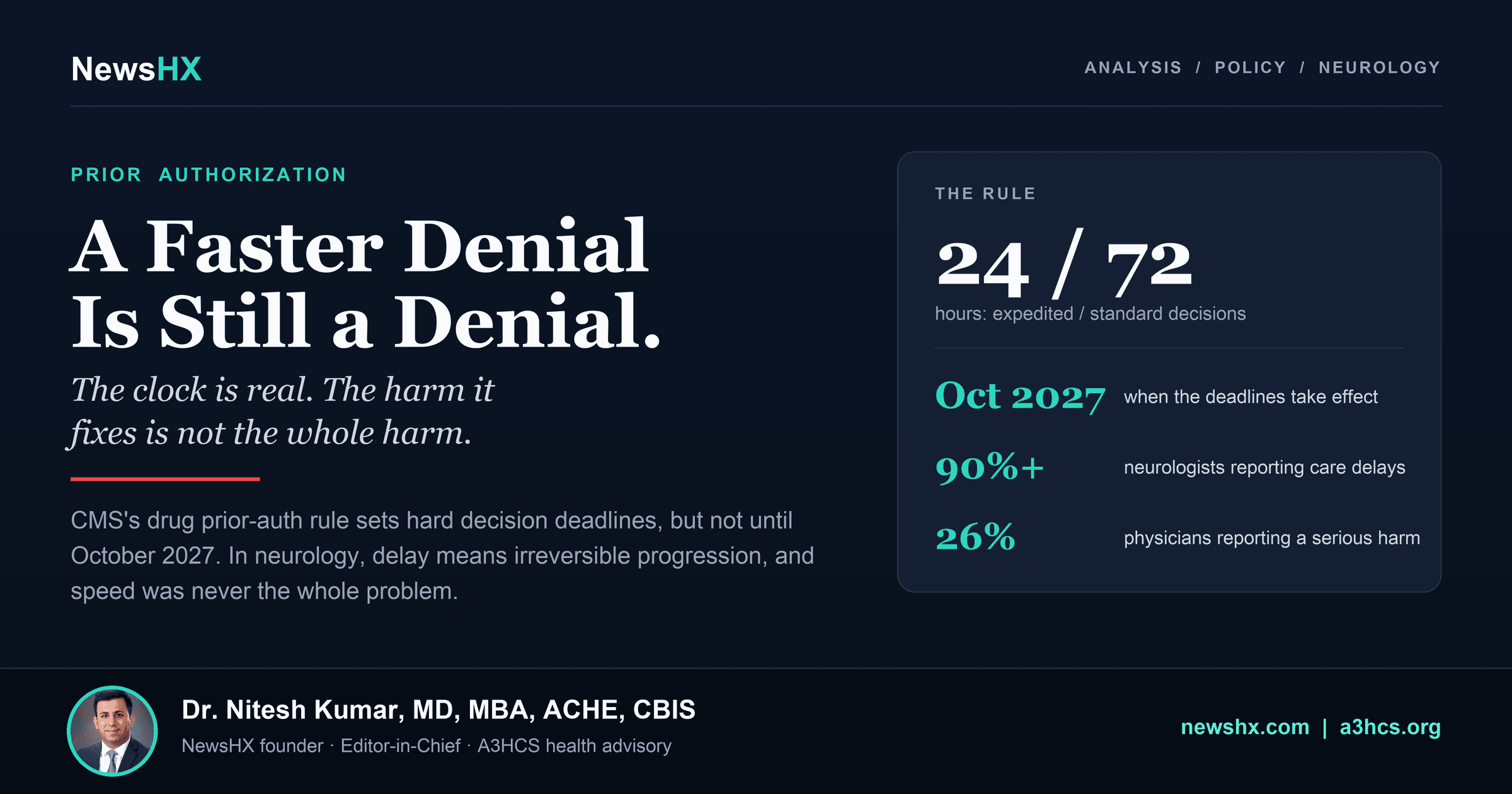
The CMS Prior Authorization Rule Will Make Denials Faster. In Neurology, Speed Was Never the Whole Problem.
Washington is calling it relief. The clock it sets is real and overdue. But it does not start until late 2027, and it leaves the part that harms neurology patients most almost untouched.
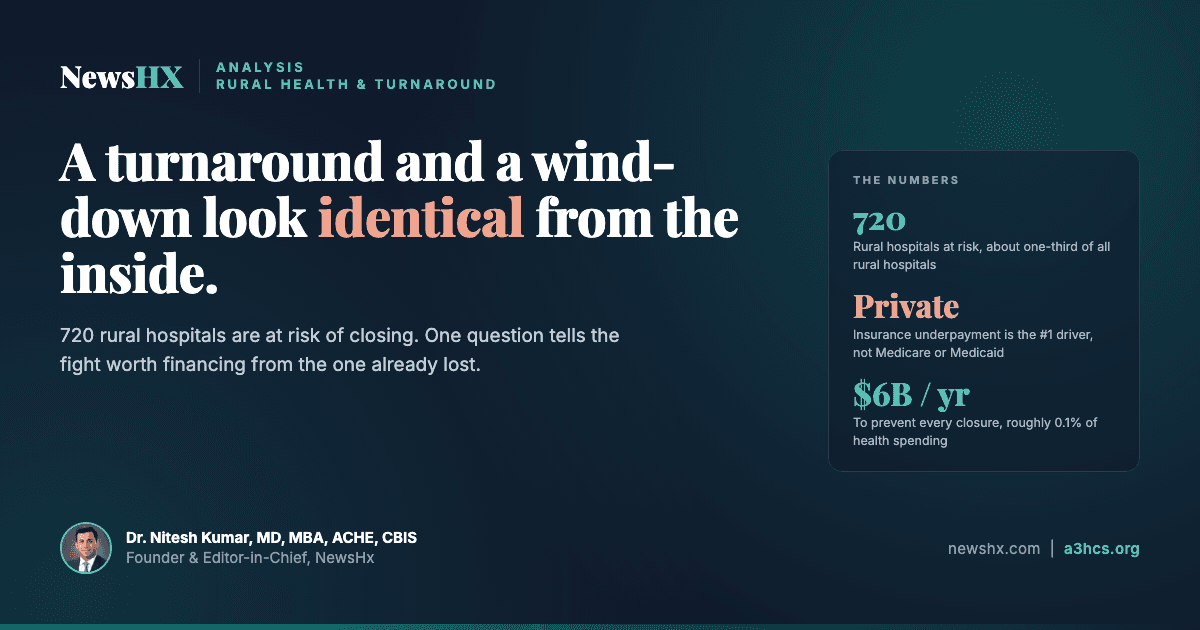
A Turnaround and a Wind-Down Look Identical From the Inside. One Question Tells Them Apart.
Seven hundred and twenty rural hospitals are at risk of closing, and the culprit almost everyone names, Medicare and Medicaid, is not the one bleeding them dry. Here is what the data actually shows, and what a leadership team can control when the policy fix is years away and the runway is measured in months.
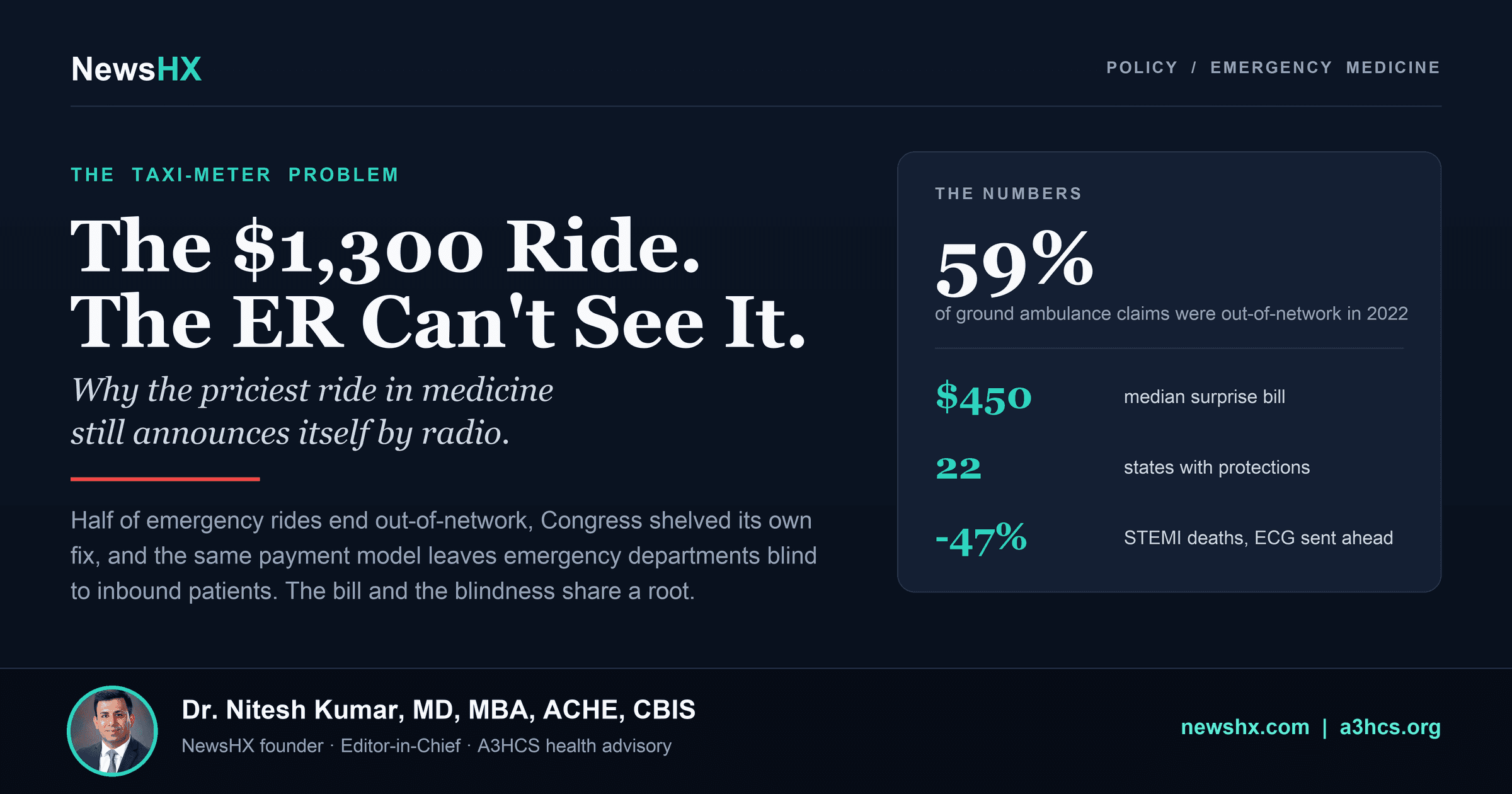
The Ambulance Costs $1,300. The ER Still Can't See It Coming.
Half of emergency ambulance rides end in an out-of-network charge, the median surprise bill runs about $450, and Congress left ground ambulances out of the No Surprises Act on purpose. The fix it commissioned instead has sat unanswered since August 2024. But the bill is only half the failure. The same taxi-meter payment model that produces $1,277 base charges also leaves emergency departments blind to inbound patients, even though sending the prehospital ECG ahead is associated with cutting STEMI mortality nearly in half. The bill and the blindness grew from the same root, and so does the fix.
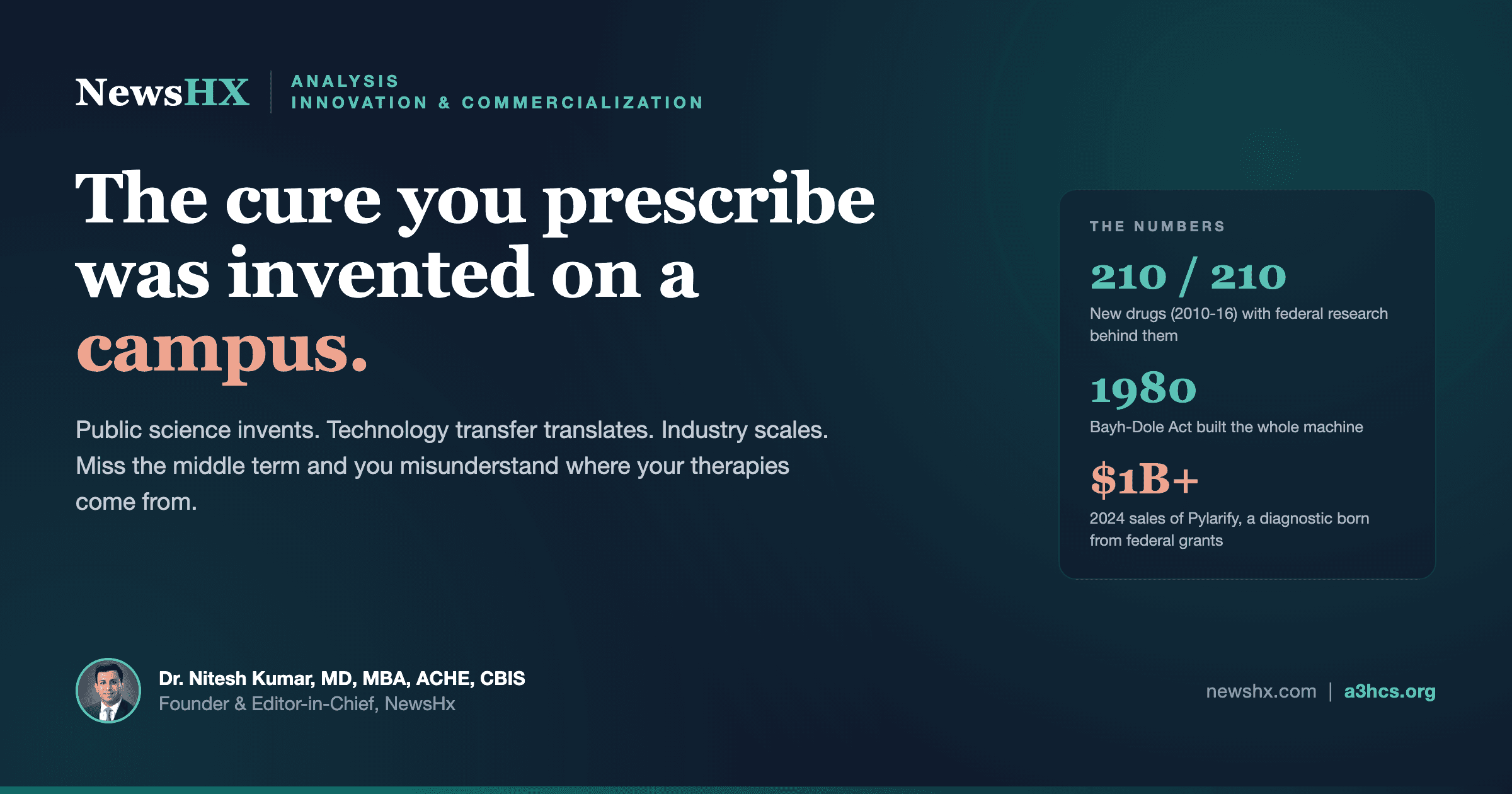
210 Drugs Won FDA Approval in Six Years. Every One Had a Federal Grant Behind It.
The pharmaceutical company gets the credit. But most new drugs, devices, and delivery systems begin as federally funded university research and reach the bedside through a process most clinicians have never heard of: technology transfer. It is the invisible supply chain of medical innovation, and it is under more pressure than it has faced in forty years.
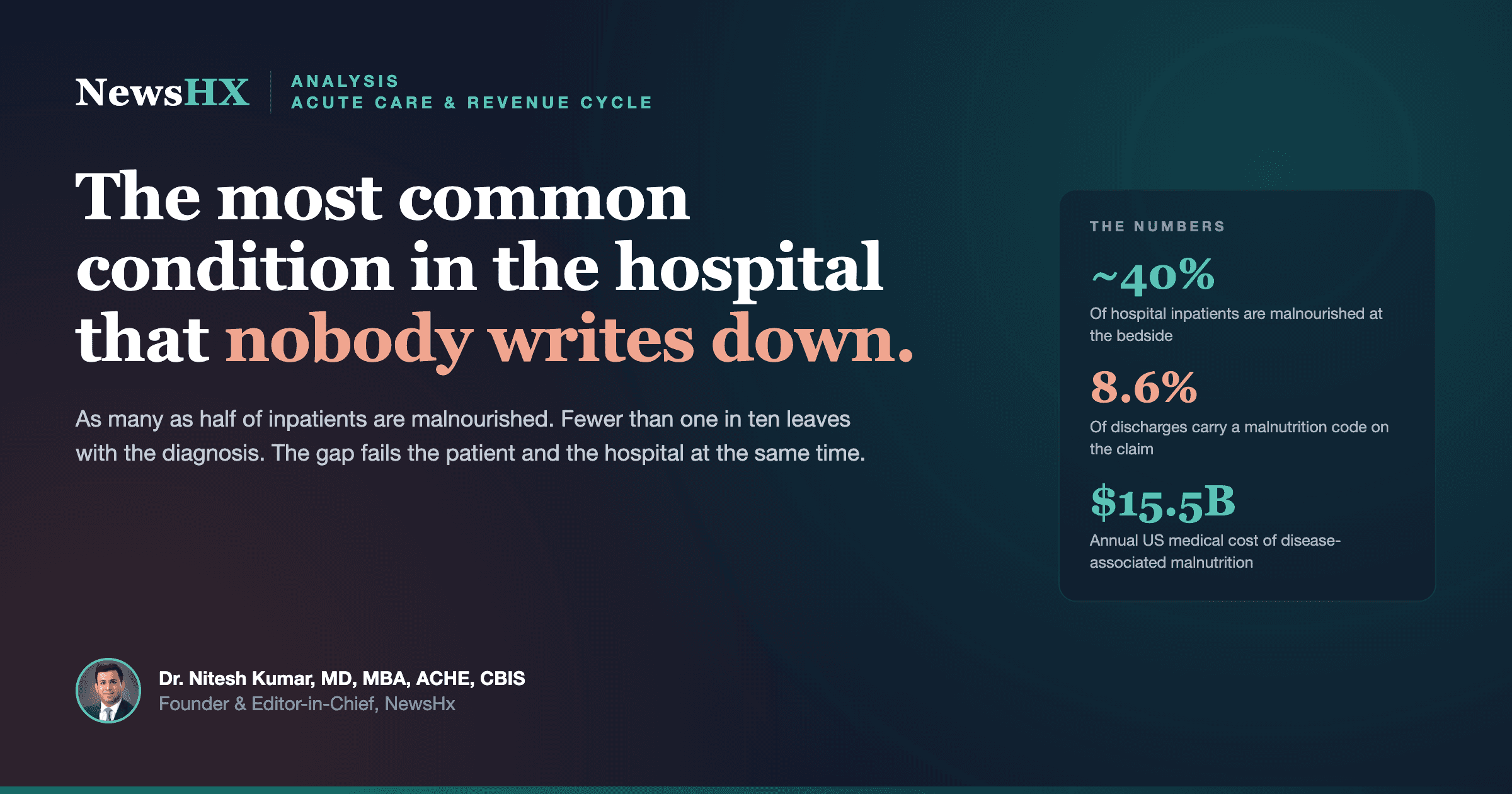
As Many as Half of Hospital Patients Are Malnourished. Fewer Than One in Ten Leaves With the Diagnosis.
Malnutrition is the most common condition in the hospital that nobody writes down. Depending on the tool and the ward, a fifth to a half of inpatients meet criteria, yet fewer than one in ten discharges carries the diagnosis on the claim. That gap is not a knowledge problem. It is a workflow problem, and it fails two parties at once: the patient goes untreated, and the hospital forgoes reimbursement it earned. A new class of automation is being sold to close the gap. It can close the documentation half. It cannot, by itself, feed the patient.
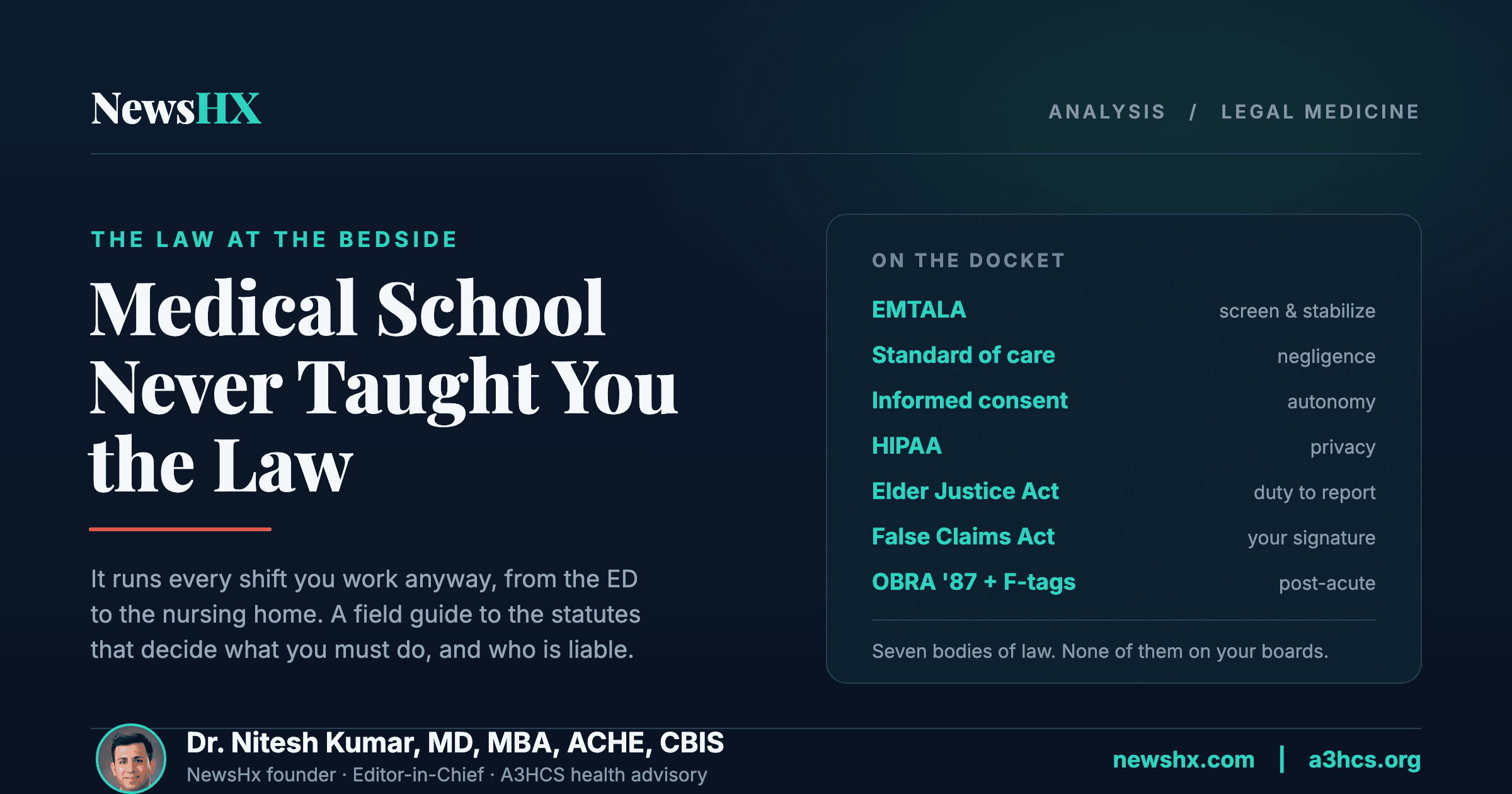
Medical School Never Taught You the Law. It Governs Every Shift You Work Anyway.
A new study shows that changing a single liability statute measurably cut nursing-home staffing. It is proof of something clinicians are rarely told: the law is a clinical force at the bedside, not a threat that waits in a courtroom. Here is the field guide to the statutes that run your shift, in the hospital and across the post-acute network.
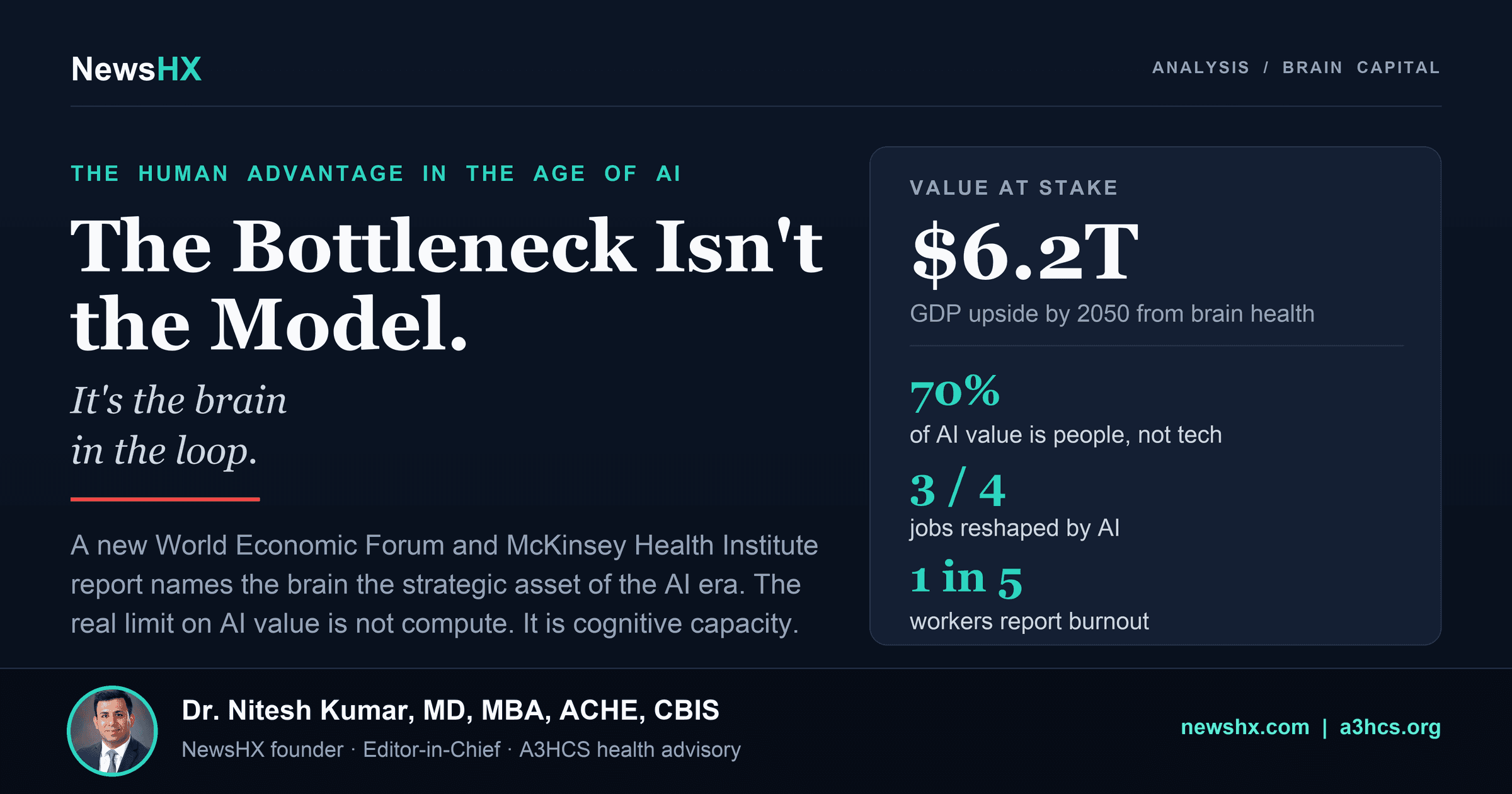
The Bottleneck Isn't the Model. It's the Brain.
Every boardroom is asking how much AI can do. It is the wrong question. A new World Economic Forum and McKinsey Health Institute report, and the people who wrote it, point at the real ceiling: the human brain in the loop. The constraint on AI value is not compute. It is cognitive capacity, and the science says we are spending it down faster than we are building it back.
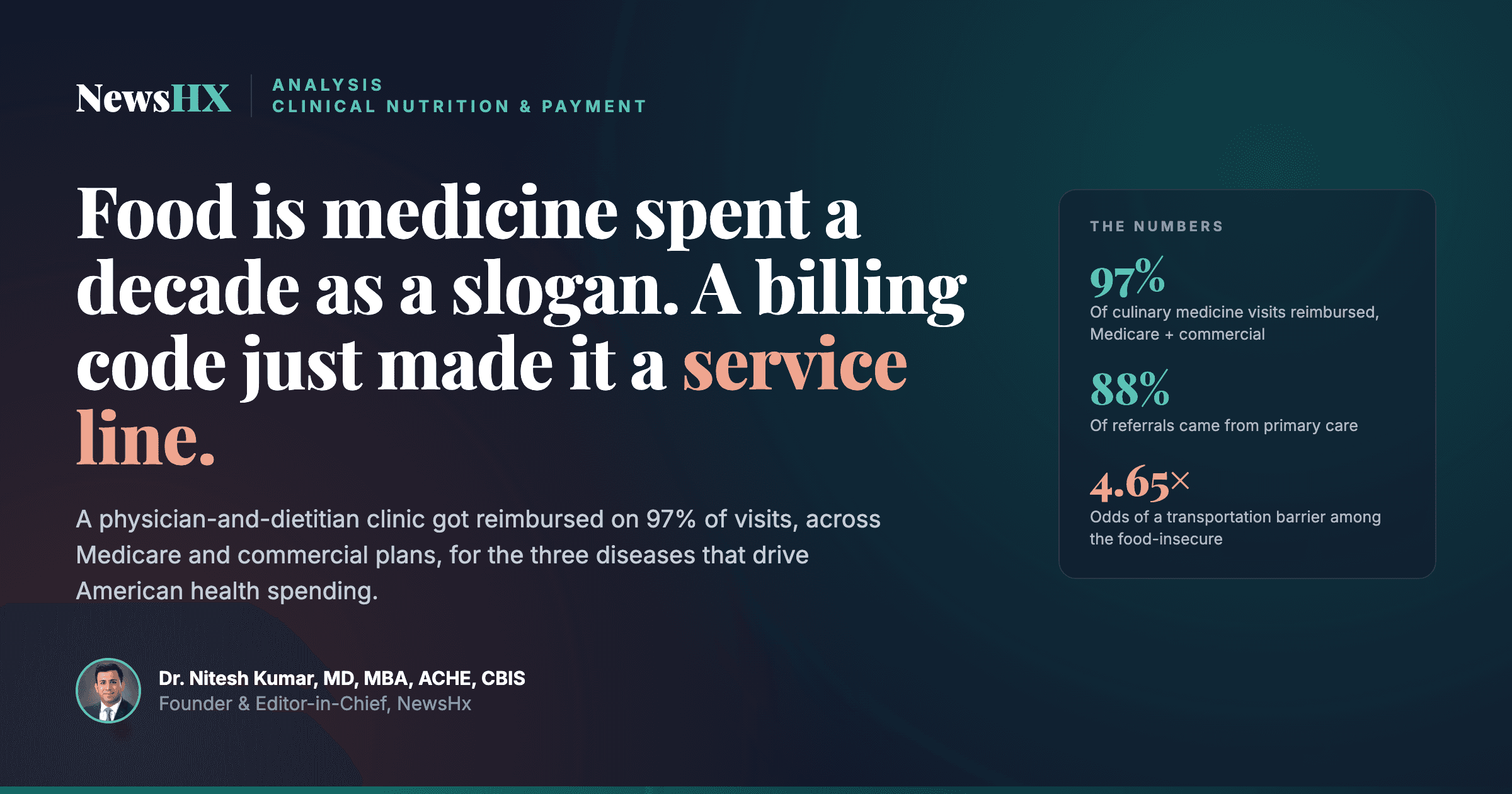
Food Is Medicine Spent a Decade as a Slogan. A Billing Code Just Made It a Service Line.
For ten years, food is medicine has been a conference slogan and a grant line. The evidence that diet drives chronic disease was never the missing piece. The missing piece was a way to get paid for acting on it. That is the piece that just moved. An academic clinic ran a physician-and-dietitian culinary medicine service for two and a half years and got reimbursed on 97 percent of visits, across Medicare and commercial plans, for the three most common cardiometabolic diagnoses in American medicine. That is not a pilot result. That is a payable service line. But a separate body of work, capped by two papers in JAMA Network Open on June 30, 2026, makes the harder point clear: a reimbursed clinic visit is not the same as a grocery bag, and the patients who need food as medicine most are blocked by barriers a billing code does not touch.
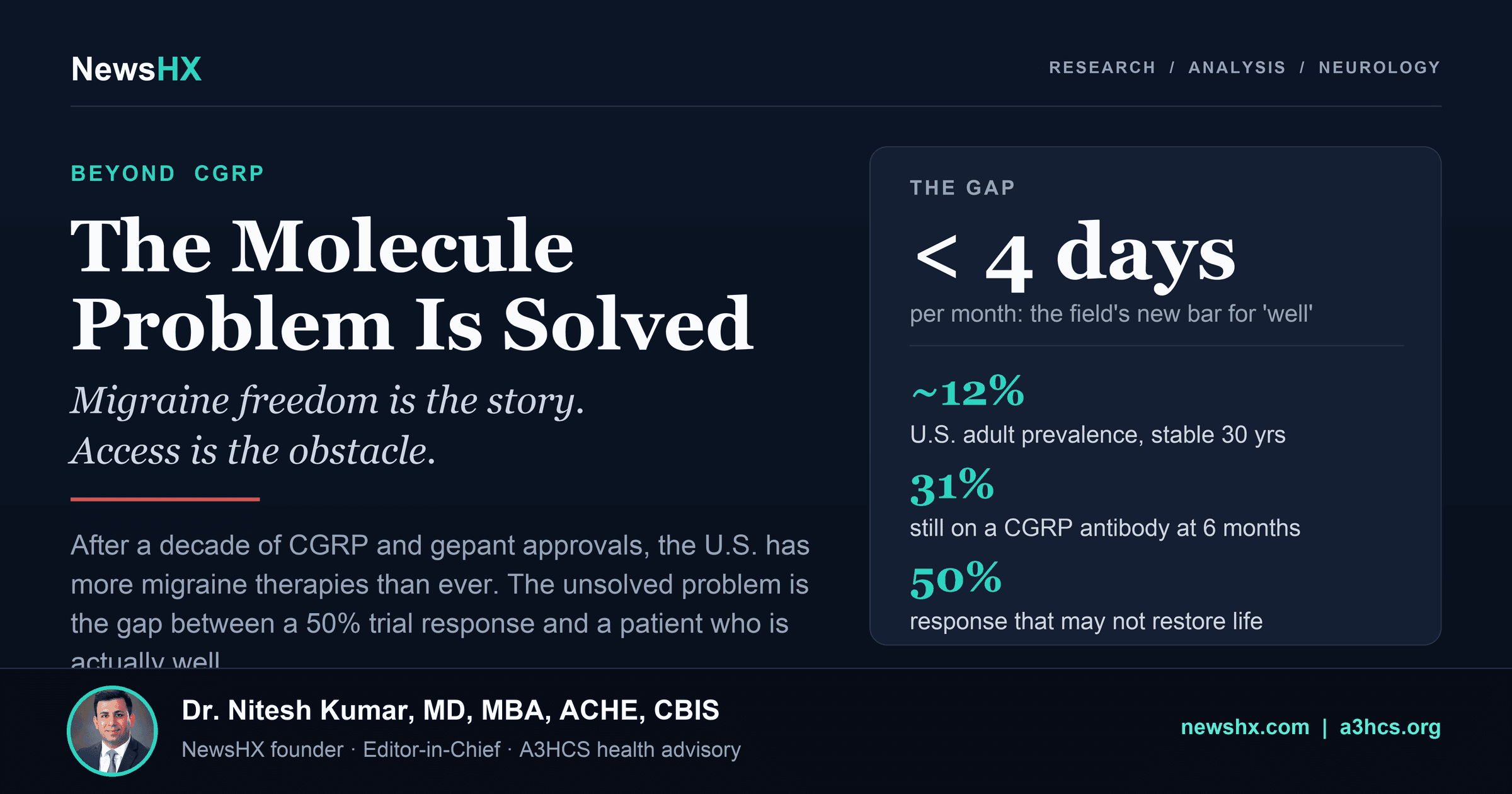
The Migraine Drug Problem Is Largely Solved. The Migraine Freedom Problem Is Not.
After a decade of CGRP and gepant approvals, the U.S. has more migraine therapies than ever, and a pipeline aimed at entirely new biology. The data say the hard part was never the molecule. The unsolved problem is the gap between a 50 percent trial response and real-world migraine freedom, and it is a problem of residual burden, persistence, and access, not chemistry.
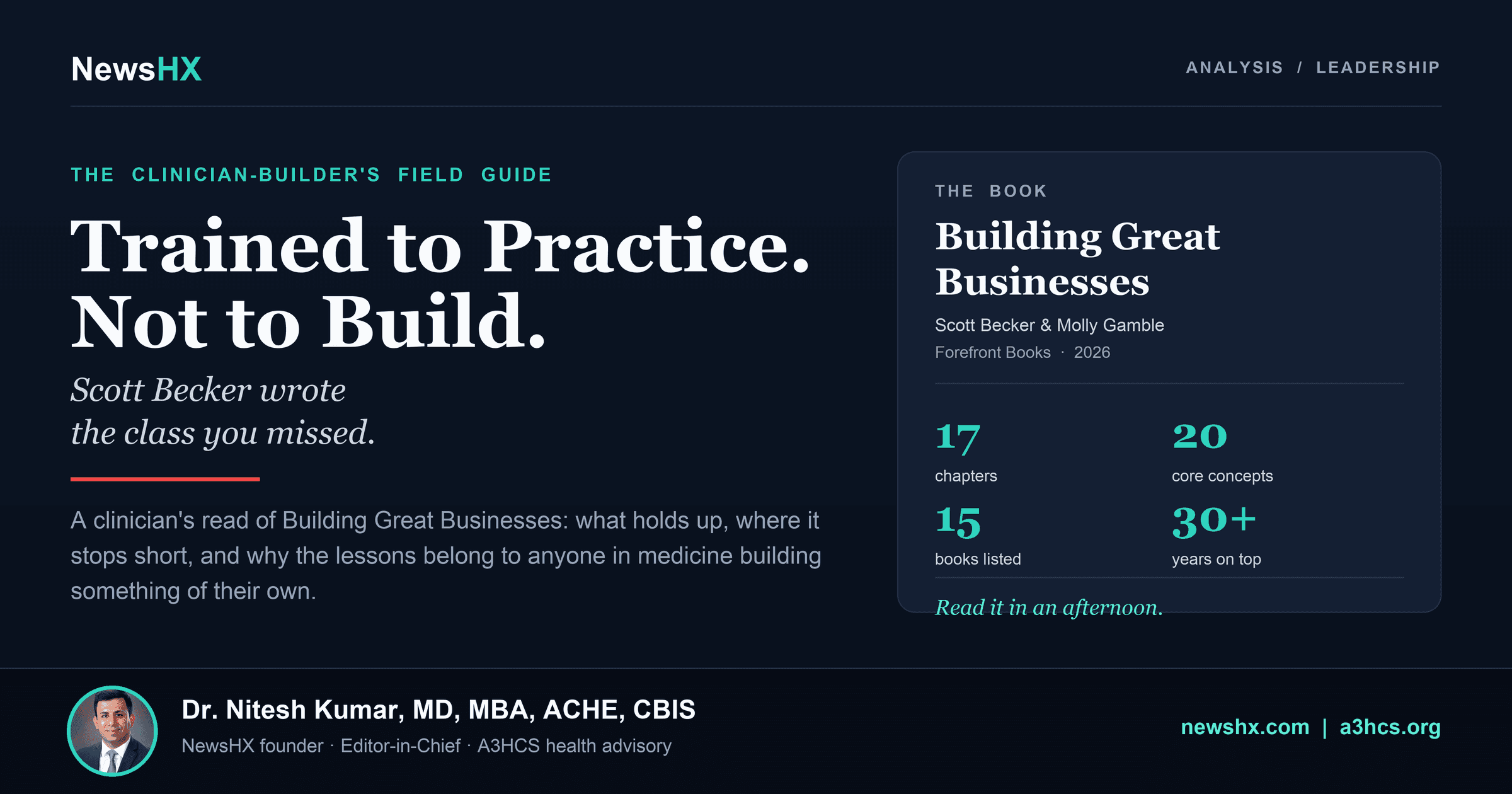
Medicine Trains You to Practice, Not Build. Scott Becker Wrote the Class You Missed.
A clinician-builder's read of Building Great Businesses. Scott Becker built one of healthcare's most-read media companies without an MD, and his new book is, quietly, the operating manual physicians are never handed. Here is what holds up, where it stops short, and why the lessons belong to anyone in medicine who has ever thought about building something of their own.
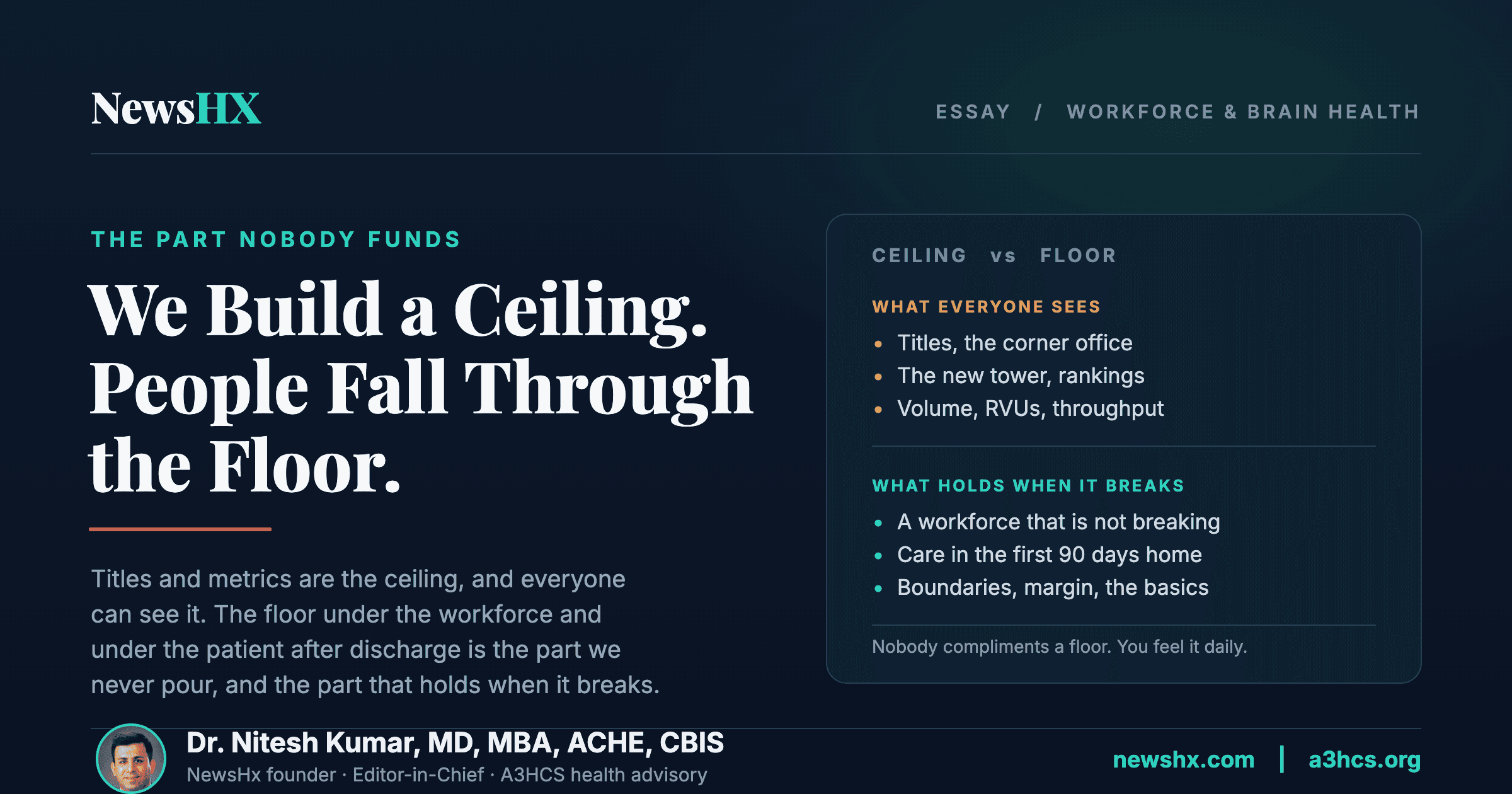
Healthcare Keeps Building a Ceiling. The Floor Is Where People Fall.
We train clinicians to climb toward a ceiling of titles, metrics, and prestige while the workforce burns out and patients go home to nothing. The brain-health map proves it: the places with the most injury get the least support, and the most dangerous stretch of recovery happens after discharge, where no floor was ever poured.
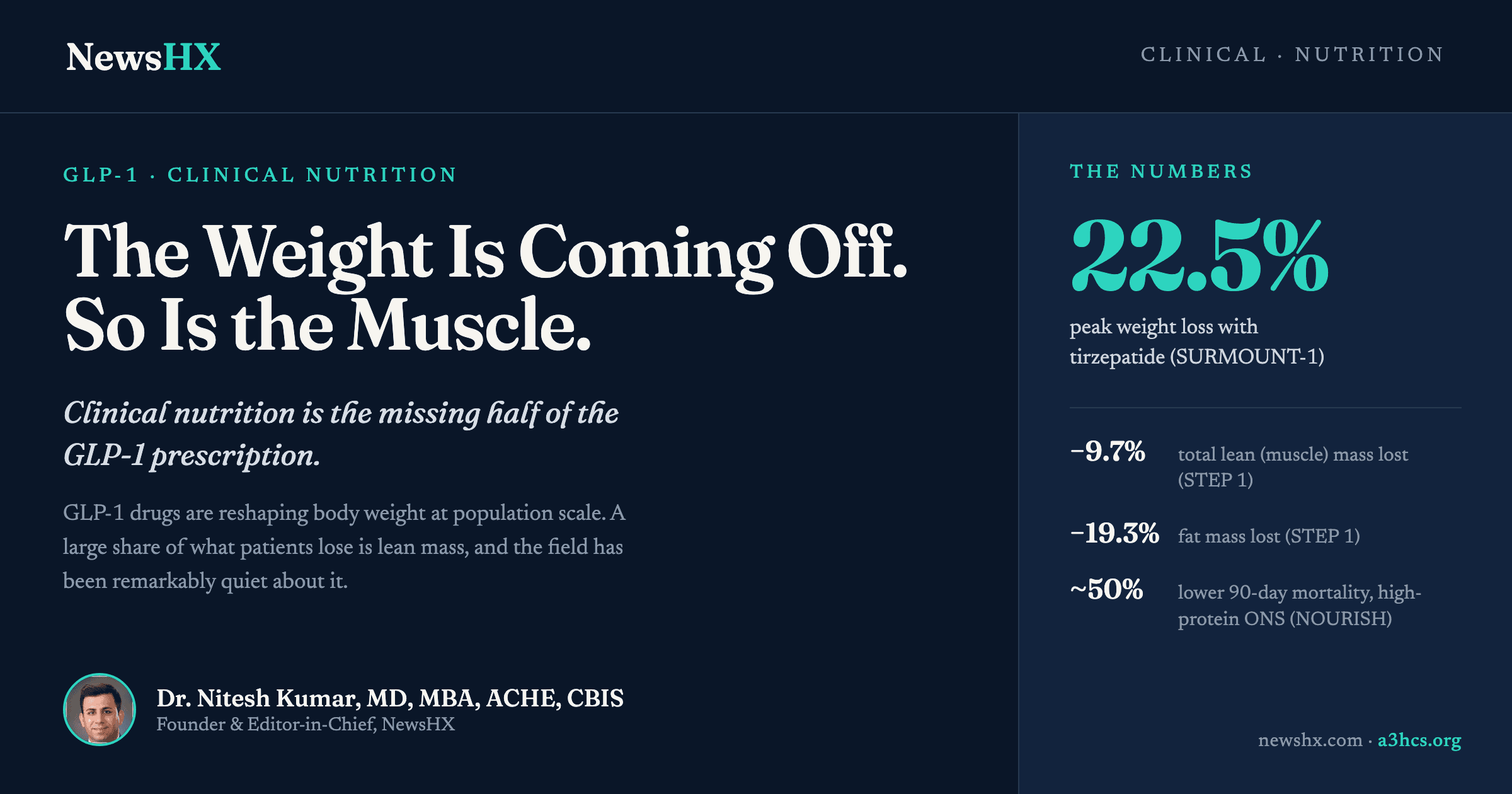
The Weight Is Coming Off. So Is the Muscle.
Semaglutide and tirzepatide are reshaping body weight at population scale. A large share of what patients lose is lean mass, and clinical nutrition is the under-discussed half of the prescription.
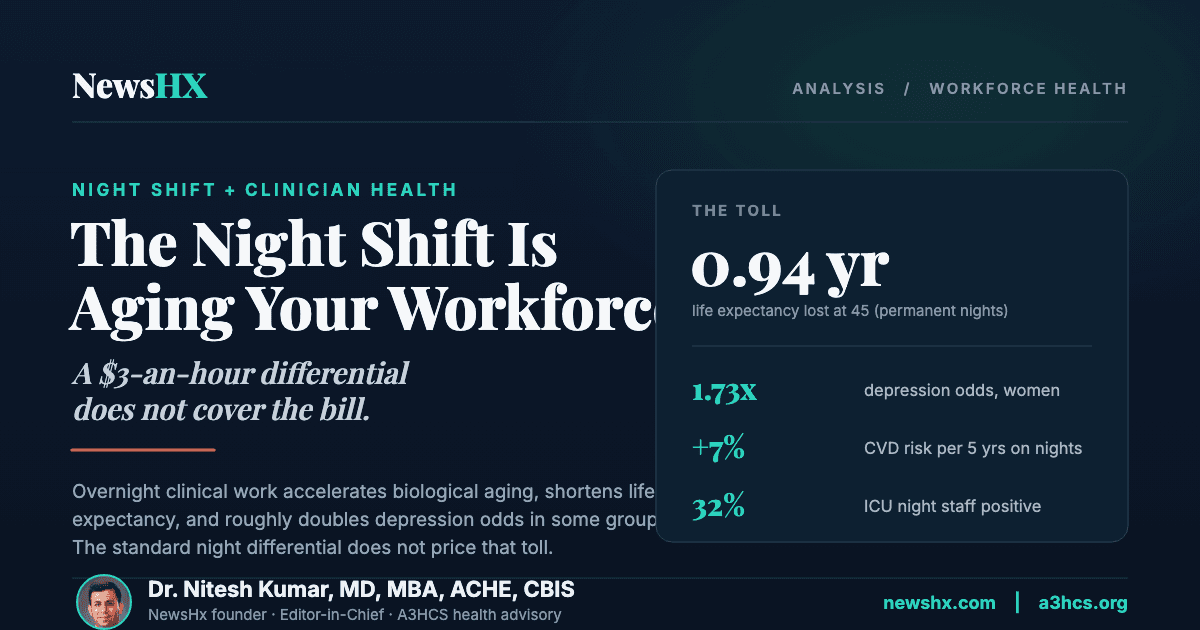
The Night Shift Is Quietly Aging Your Workforce. A $3-an-Hour Differential Does Not Cover the Bill.
We pay people a small premium to work against their own biology. The science now says the premium is not close to the cost, and most of that cost lands on mental health.
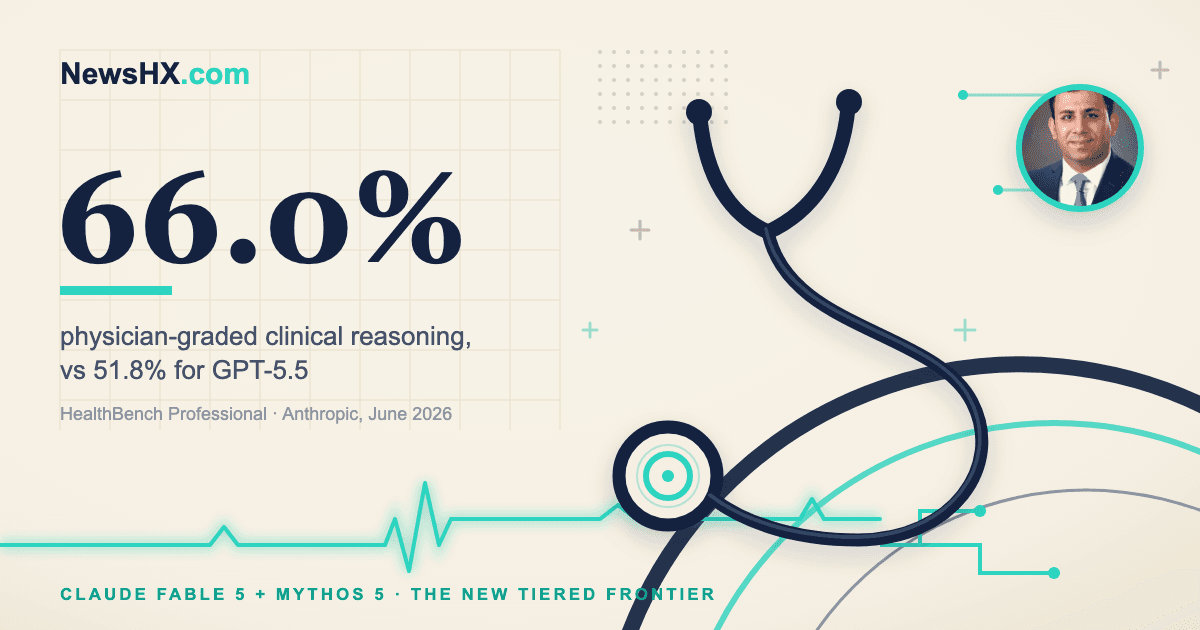
Frontier AI Now Has a VIP List. Healthcare Is On Every Side of It.
Anthropic just shipped its most capable AI model in two tiers: a safeguarded public version, and a full-strength version reserved for vetted institutions. The biggest gains are in health reasoning, drug design, and cyber defense, and so are the hardest governance questions.
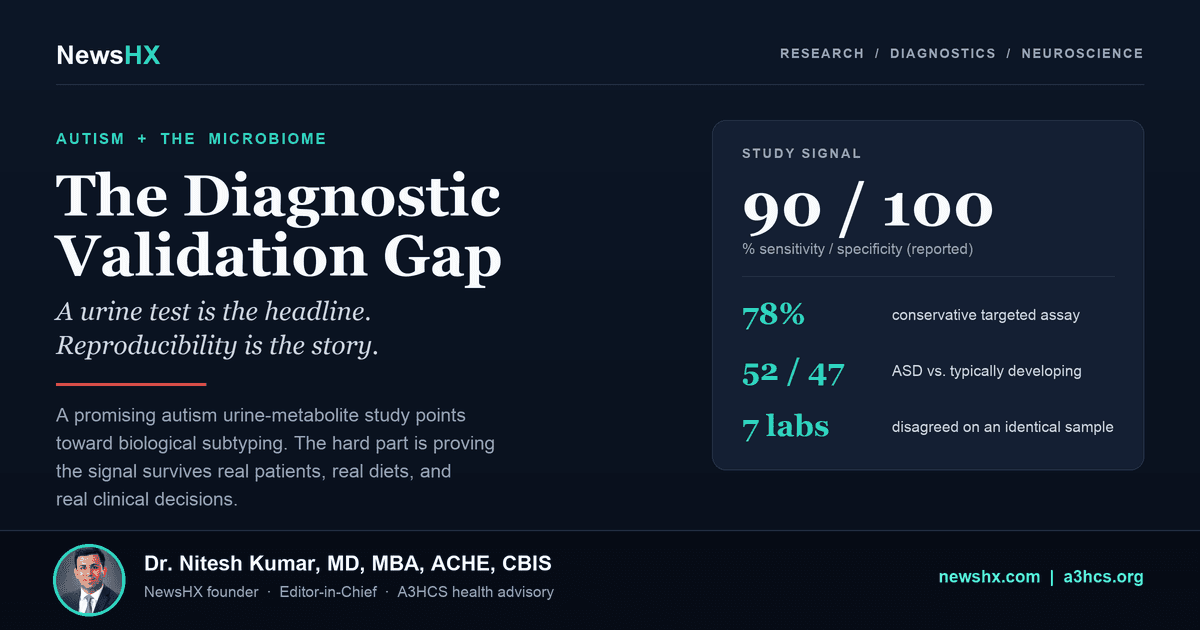
Autism, the Microbiome, and the Hard Part of Diagnostics
A promising urine metabolite study points toward biological subtyping in autism. The real question is whether microbiome science can move from compelling snapshots to reproducible, clinically useful longitudinal data.
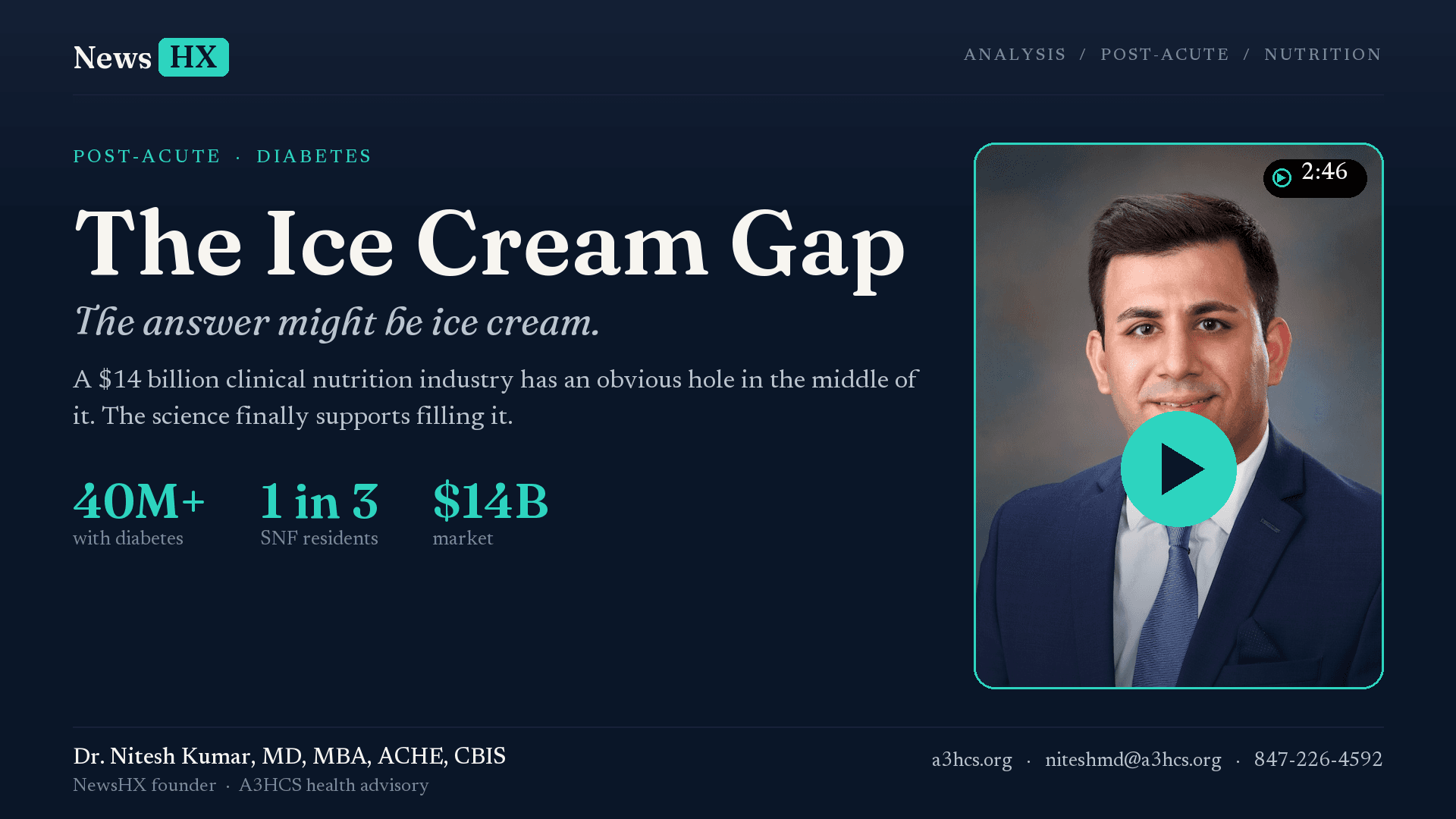
Post-Acute Care Has a Diabetes Problem. The Answer Might Be Ice Cream.
The clinical nutrition industry has built formulas, shakes, and tubes for every condition. It has not solved the one thing diabetic patients in inpatient rehab keep asking for.
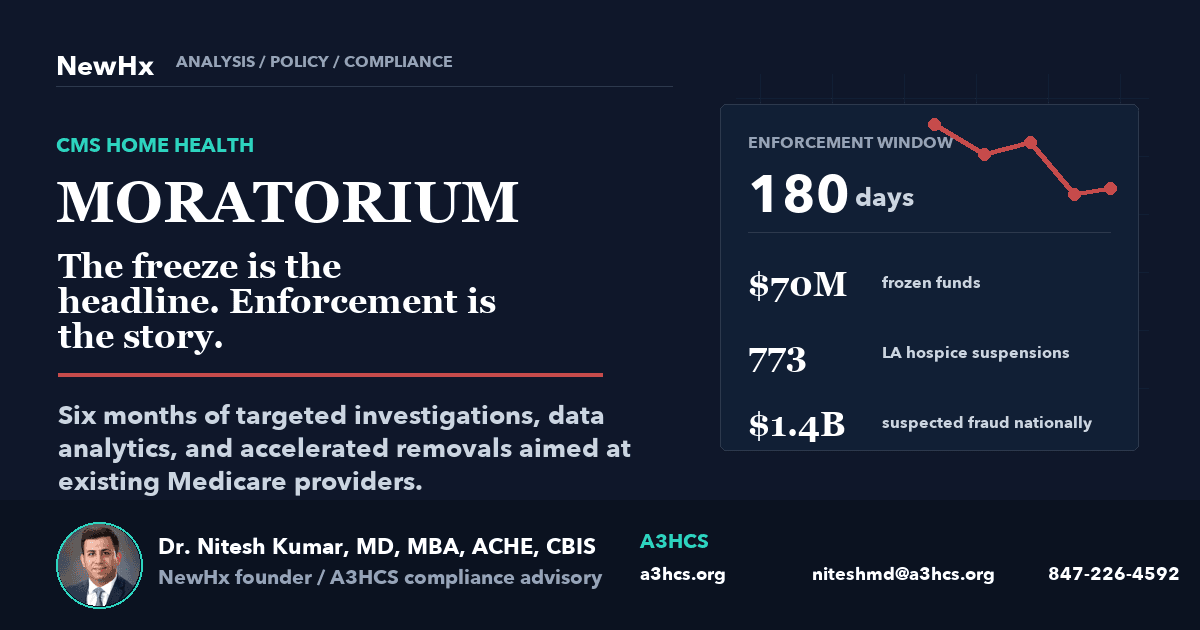
The CMS Home Health Moratorium Is Not About New Entrants. It Is About You.
CMS's six-month home health and hospice enrollment moratorium is being read as a growth story. The real signal is an accelerated fraud-enforcement campaign aimed at providers already enrolled in Medicare.

Why an Academic Hospital Put Its Name on a Formula 1 Car
UChicago Medicine made the smartest marketing move in American medicine, and almost everyone read it as the dumbest. Here is what the logo is actually buying, and why a Chicago Grand Prix would prove the bet.